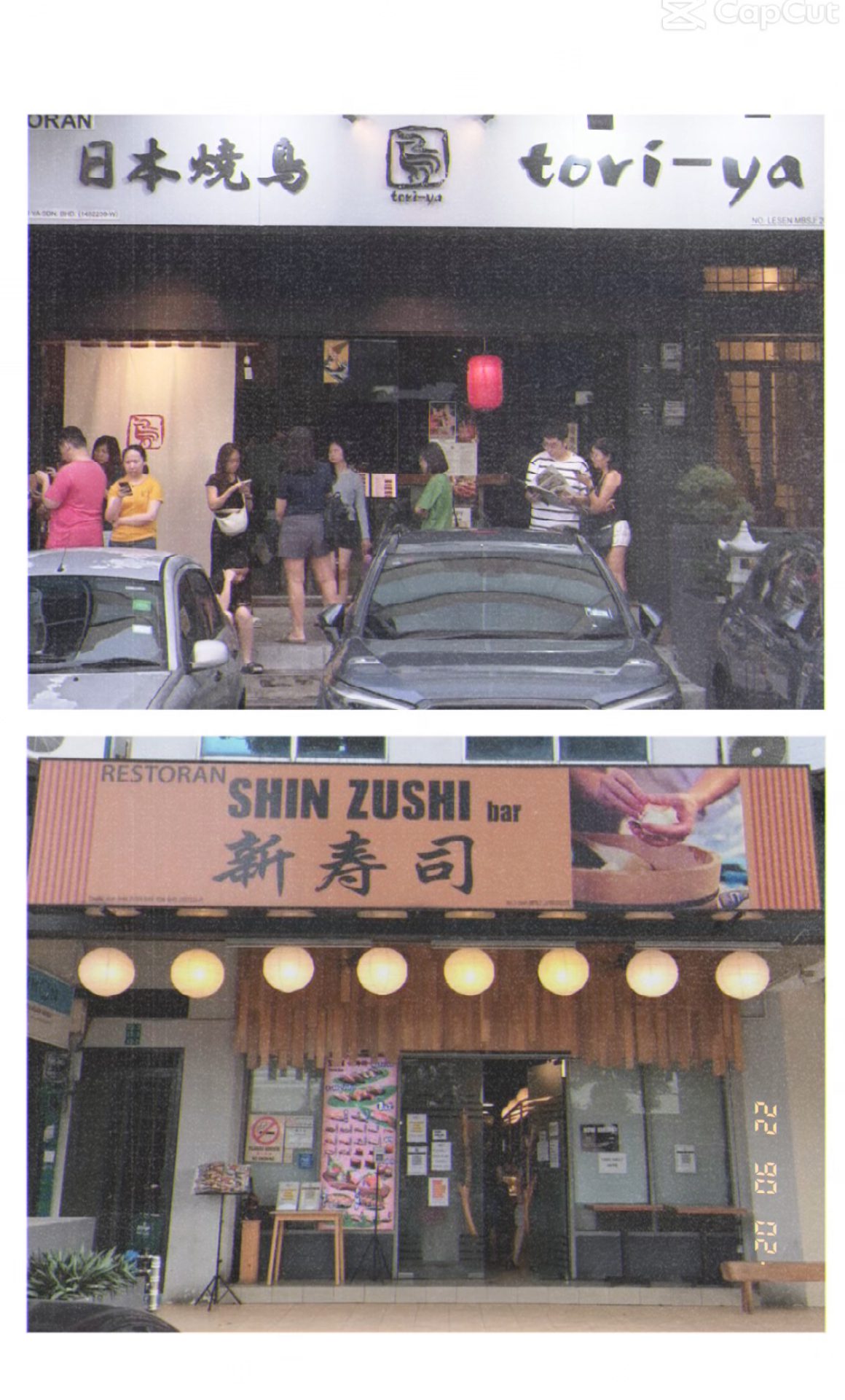
Shin Zushi:
Taste – 8.4
Atmosphere – 8.1
Service – 5.8
Value – 8.3
Address: No .12G, Jalan, Persiaran Puteri 1, Bandar Puteri, 47100 Puchong, Selangor
Toriya:
Taste – 7.4
Atmosphere – 7
Service – 8
Value – 7
Address: 12A-G, Persiaran Puteri 1, Bandar Puteri, 47100 Puchong, Selangor
Sushi, ramen, tempura, yakitori, soba, tonkatsu. The Japanese know what they’re doing. Few cuisines manage to produce so many global favourites, each one capable of converting even the most stubborn eater. Travel to Japan with the fussiest companion, and there will always be something they fall for.
And then there are the people. Step through the door of a Japanese restaurant, and a chorus erupts. A loud, perfectly practised “Irasshaimase!” from the staff, like an unrhymed choir. Heads turn. Diners glance up. And there you are, briefly on stage, standing awkwardly in the doorway and doing your best not to make eye contact with anyone.


It’s this small theatre of hospitality, alongside the food itself, that places like Shin Zushi and Toriya Yakitori in Puchong aim to bring to Kuala Lumpur: a slice of the Japanese dining experience.
Both are situated right next door to each other: Shin Zushi focuses on affordable, high-quality sushi and sashimi, whilst Toriya is a bit more classy, serving bar-top yakitori. It is perfect for that indecisive group that can never make up their mind in advance. All you need to know is that you feel like a Japanese person, then rock up and decide which one you feel like in the moment.
Shin Zushi is a popular spot, and they make no attempt to hide it. Reservations aren’t allowed, so queues are part of the ritual. The system, however, is mercifully practical: take a number and wander off while you wait. Around the corner sits a slightly questionable Chinese bar where you can pass the time, perhaps over a drink, or even lose badly at pool to a pot-bellied local.
Back at the restaurant, the atmosphere is lively, almost chaotic. The interior is simple; beige walls are scattered with Japanese writing, while staff move briskly between tightly packed tables. It feels uncomplicated, with a low hum of chatter that reminded me of the kind of casual neighbourhood spots you stumble upon in Japan.
Yet the welcome doesn’t quite match the setting. The obligatory chorus of “irasshaimase” rings out when you enter, but beyond that, the service feels curt and slightly inattentive. At one point, we were asked to leave before we had even finished eating, despite being there for less than an hour and a half. It felt abrupt, particularly given that ordering itself required little effort from the staff; everything was done through a QR code, leaving them mainly to deliver dishes to the table.
Still, if the service feels like an afterthought, the kitchen certainly doesn’t. The food is where Shin Zushi truly shines. Japanese restaurants outside Japan can often leave me slightly underwhelmed, the price rarely matching the experience. Here, though, the opposite was true. The dishes were surprisingly affordable, yet easily comparable to what you might find in a polished sushi bar in central London.
The sashimi arrived freshly sliced and beautifully chilled, laid neatly over a bed of shaved ice. Whitefin tuna, bluefin tuna, and salmon, each piece smooth, delicate, and clean on the palate, letting the natural sweetness of the fish speak for itself.
The nigiri offered a wide range of cuts, each resting on a neat cushion of rice: soft yet firm, perfectly vinegared, and still faintly warm from the master’s hand that had just shaped it. The maki rolls are always a mystery. I never quite know what goes into these elaborate constructions, but the flavours are always there, bouncing around the tongue before settling into something warm and deeply satisfying.
But the surprise winner of the day was the steak. I never order steak, especially at a place that clearly lives and breathes sushi and sashimi. Yet there it was. Thin slices, impossibly tender, served with a warm Asian-leaning sauce that wrapped around the meat like a particularly affectionate polar bear. It left me momentarily speechless. At 50 RM, it’s a must. There are steakhouses that would struggle to do better.

Another unexpected delight: the unlimited wasabi. It turns the table into a sort of informal competition, who can swallow the most in a single bite without their sinuses detonating and causing a scene in the restaurant.
On the other hand, you have Toriya. A much classier establishment, though the same ritual applies. The chorus of “Irasshaimase!” upon entering is, I would say, marginally better than Shin Sushi’s; slightly sharper in pitch, more unified. One suspects there could be a competition for this somewhere. I’m amazed that one of the crazy Japanese game shows has not done it.
The aesthetics are the complete opposite: black walls, minimalist tables, and staff standing perfectly poised behind the counter. Everything is hushed. The acoustics are so carefully managed that you barely hear the other diners, making it an excellent date spot.

The menu is extensive, as yakitori menus tend to be. Every possible cut of chicken seems to appear somewhere. Give them time, and I suspect the menu might include suspicious cuts of animals. Mercifully, Toriya simplifies things by offering tasting menus — 12-, 10-, or 7-course, each moving you through different parts of the chicken.
It’s a far more respectful approach to the animal than our Western habit of extracting the breast and leg and declaring the job done. Watching the skewers being cooked and presented directly in front of you adds a sense of theatre to the meal as well. Although it looks simple, I can tell I would burn the shit out of it.
My personal favourite is always the chicken heart: rich but not aggressively metallic like liver. I often encourage sceptical friends to try it. They usually approach with suspicion and leave pleasantly surprised.
The most unusual skewer, however, was saved for last, an immature egg yolk still attached to a section of fallopian tube. It was alarming. The yolk, bright and golden like a miniature sun, bursts in the mouth, while the tube provides a chewy counterpoint. It’s strange, but also fascinating. The sort of thing you never expect to eat, but are always curious to go back to try it again.
A bowl of soft, comforting rice followed, rounding things off, with the option of homemade ice cream to finish, a tidy ending to a rather adventurous meal.


The only slight downside was the seasoning. Some skewers leaned heavily on salt. Yakitori is, of course, designed to accompany generous quantities of alcohol, which may explain it, but at times the balance tipped a little too far, and a deeper glaze or sauce might have softened the blow.
Still, both restaurants offer experiences that leave you happily full. Shin Sushi is straightforward pleasure, clean, and simple. Toriya, meanwhile, is the more immersive affair, a slow exploration through the lesser-known corners of a meat.


