Tag: Malaysia

  • The one-dish restaurant and its discontents

    The one-dish restaurant and its discontents

    Clean signage, no English, a wooden bench perched outside like some takeaway joint. Menya Hanabi. A simple place. Clearly focused on efficiency and the food rather than anything extravagant. Step inside, and you hit a mass of solo diners. Heads down, slurping thick steaming noodles, thoughts pummelling through them. It felt like walking into an office where everyone hated each other and would rather eat alone. All suited up, hair over their eyes, no sudden movements, flinching at anything that brushed them.

    The interior was interesting. Interesting in the way that makes you ask whether construction had actually finished. Plywood still exposed around the kitchen counters, wires and random chargers flailing loose, waiting to electrocute someone. Lamps hanging ajar overhead, primed for a head smack. But we are in Asia, and the staff flew around the place like the world had just ended. Sitting down, I felt thoroughly reassured this spot was the real thing.

    The menu, well, nothing surprising. Couldn’t understand half of it, even though it was in English. The words were in Japanese. So I stepped back into my early days, staring at the pictures with my mouth open like I knew exactly what was in each dish. Went for the easy option. The one with a star next to it, taking up a whole page. The dish people come from far and wide for. The Nagoya Mazesoba.

    Nagoya, not Taiwan, despite what the name leads you to believe. The thing was invented in Nagoya around 2008, a Japanese spin on a Taiwanese minced pork noodle, and from there it went chain shop, then global. Another dish quietly lifted, sharpened, and sold back to the world. The Japanese are good at that.

    Small at 24RM, large at 26RM. Two ringgit between them, which felt like a con. Everyone’s sitting there with the big bowl. A cheeky little upsell. Had to add the gyozas, as always. You can tell a place by them.

    The restaurant was filled with steam and chatter. Mostly the staff screaming across the room and the clash of pans in the kitchen. The food soon arrived. The mazesoba landing before the dumplings is always a bit odd, but food in front of you is a good sign regardless. The dish came neatly presented, each part walled off from the next. It reminded me of being a child, picking meals apart and taste testing before saving the best for last. That didn’t last long. Aesthetically I lifted the thick soba up to the roof before splatting it down, mixing the condiments into a thick sludge. The gloop of the noodles, coated generously in rich tangy sauce and minced beef, meant every bite was perfectly covered. The slurp, the gulp, the stained cheeks, the crunch of spring onions. A sensory masterclass. Every taste bud covered. The kind of meal where you could be drunk. Taste dialled up, eyes staring into nothing, no words, just slurping it down.

    Then the goldmine. Still hungry? No need to fear. You get topped up with rice. Warm sticky rice, dropped into the bowl still slick with that thick, salty sauce. Mix it all together and you’ve got an incredible palate cleanser. Bowl left clean. Like a dog licking the leftovers off a plate.

    The dumplings turned up annoyingly late and didn’t taste anywhere near the soba and rice. A let down, and it left a slightly flatter taste in my mouth on the way out. So, for future readers and restaurant goers, this spot is for the mazesoba and nothing else. Quick stop, clean the bowl, out you leave. Thirty minutes max. Satisfied and content with what you’ve just eaten.
  • Inside Petaling Street’s Hidden Food Alleyway: Number 1 food street in KL

    Inside Petaling Street’s Hidden Food Alleyway: Number 1 food street in KL

    Lorong Bandar 20, City Centre, 50000 Kuala Lumpur, Wilayah Persekutuan Kuala Lumpur

    Taste – 6
    Atmosphere – 8
    Service – 7
    Value – 9.6 (12rm/£2)

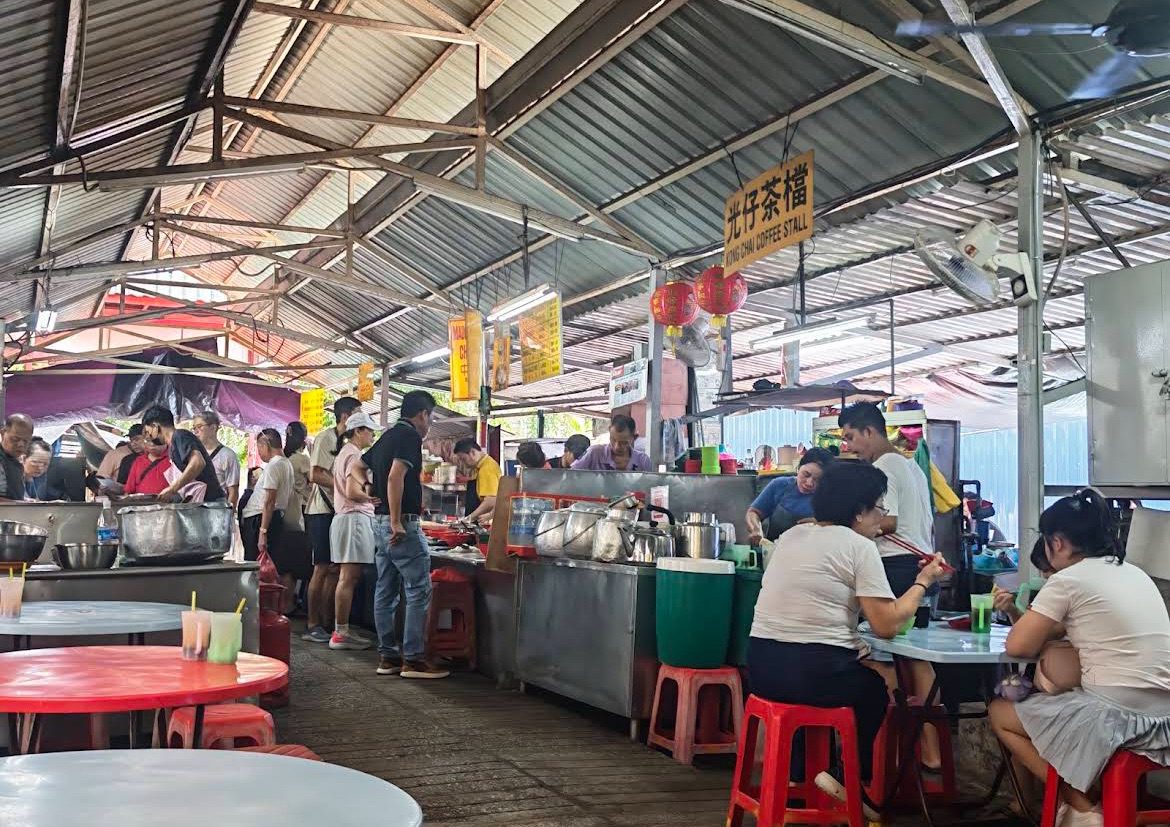
    People talk about stepping into Narnia, a hidden world tucked behind a wardrobe. I get the same feeling slipping off Petaling Street, past the counterfeit handbags and fluorescent souvenirs, and into “paradise?”

    There are no fauns here. No talking lions. Just a narrow, muddy alley that looks like it hasn’t been cleaned since the British left. The ground is slick, the air thick, with unknown liquids dripping from above. Rats dart. Cockroaches scatter. Feels post-apocalyptic.

    And then, suddenly, it opens up.

    A junction. A crowd. Steam rising. Plastic stools. Breakfast in full swing.

    The stalls are run by the older generation – people who have been doing this for decades, maybe longer. No menus, no branding, no performance. Just repetition and muscle memory. Chee cheong fun at one stall. Curry laksa at another. Yong tau foo and curry mee are anchoring the rest. Everything revolves around the same idea: hot broth and deep flavour. Feels like it could cure any illness.

    At first, it makes no sense.

    It’s not a restaurant. Not quite a stall either. You don’t order, you assemble. Step up, point, nod, hope for the best. Most of what’s on display is unlabelled and, to the untrained eye, unidentifiable. The safest strategy is simple: watch the locals and copy.

    Then it’s your turn.

    You step forward. Suddenly, it’s high pressure. The line moves fast, and hesitation is not appreciated. Noodles; thin or thick. That’s your only real decision. After that, just gesture vaguely at everything and commit. Within seconds, it’s done. A ladle of curry broth floods the bowl, releasing a dense, spiced aroma that briefly overpowers the surrounding drains.

    You take your bowl and sit somewhere between a plastic stool and a drainage system. If it rains, you suspect this entire place might disappear under water. It feels temporary. Almost illegal. The kind of situation where, if the police suddenly appeared around the corner, everything could disappear in the blink of an eye.

    And maybe it is.

    There’s talk that places like this are being pushed out; too messy, too real, not the kind of “authentic” that tourism boards like to advertise. Once, there were dozens of these stalls. Now, just a handful remain.

    The first bite is a mistake. Scalding. Mouth-burning. Instantly regretted. The spice doesn’t help; it hits fast and sits heavy.

    The broth itself is thinner than expected, but loaded with flavour. Imagine your favourite curry stretched into a soup, less intensity, more depth. It clings to everything.

    You don’t really know what you’re eating. You discover it mid-bite. Aubergine, soft but still holding shape, soaking up the broth until it bursts slightly under pressure. Perfect. Then something else, a pale, ambiguous strip that looks promising but collapses into a chewy, sponge-like nothing. Pork skin, apparently. Not everything is a win.

    The meatballs arrive with familiar mystery. Soft to the point of suspicion. Barely flavoured on their own, but excellent carriers for the broth.

    And then, unexpectedly, the best thing in the bowl: potato.

    It shouldn’t stand out, but it does. In a sea of unknowns, it’s recognisable. Reliable. A small, quiet reminder of home.

    By the end, the verdict is clear.

    Is it different? Yes.
    Adventurous? Definitely.
    Satisfying? Not entirely.
    Authentic? Completely.

    If you want to understand what Chinatown in Kuala Lumpur used to be, before the polish, before the curation, this is where you come.

    Just don’t expect to sit comfortably.

  • Aliyaa: The Place That Proves We’ve Been Eating the Wrong Curries

    Aliyaa: The Place That Proves We’ve Been Eating the Wrong Curries

    No 48 G&M, Jalan Medan Setia 2, Bukit Damansara, 50490 Kuala Lumpur, Federal Territory of Kuala Lumpur

    Taste – 7.2
    Atmosphere – 7.4
    Service – 5.2
    Value – 7

    Sri Lankan food is better than Indian food. Cue the outrage, the keyboard warriors, the aunties clutching their spice tins. But hear me out: it’s fresher, lighter, and far less likely to send you sprinting to the bathroom. Unlike its heavier North Indian cousin, it doesn’t leave you bloated, sluggish, or spiritually defeated. It’s food you can eat and still function afterwards.

    Which begs the question: why aren’t there more Sri Lankan restaurants? Why does Indian cuisine monopolise every high street from London to KL? The answer, most likely, is population. 1.5 billion Indians have carried their food far and wide, while Sri Lanka remains an underrated culinary gem waiting for its global moment.

    So when I heard about a Michelin Bib Gourmand Sri Lankan spot tucked away in Kuala Lumpur, my curiosity was instantly piqued. Aliyaa sits in one of KL’s odd, mismatched pockets. A so-called party strip lined with a British pub, a couple of clubs, and late-night burger stalls. It feels like the wrong restaurant in the right place: white tablecloths, soft lighting, the sort of setup that prepares you for foie gras.

    The menu, however, is charmingly bare and cryptic. Sri Lankan dish names are offered without a single clue as to what they might actually be. A little description would’ve gone a long way. As it stood, it was culinary roulette.

    Ordering drinks shouldn’t have been difficult, but somehow it was. Asking for water turned into an unexpected piece of dinner theatre. I felt like a confused tourist negotiating a burger with no pickles, except all I wanted was water. We eventually got there, after some laughs and a few too many apologies.

    The food itself required less diplomacy. We ordered a spread of dishes we couldn’t pronounce, and Google became our silent third diner. We thought about asking for recommendations, but given the water saga, we decided not to push our luck.

    I’ve always loved the chaos of everything arriving at once, a table full of dishes you grab, swap, steal, and share. So when I noticed the table next to us guarding their plates like a Gavin and Stacey curry-night reenactment, I wanted to tell them: are your stomachs not bored? It keeps your palate awake instead of hammering it with the same bite on loop.

    We ordered a selective range: chicken sothie, fish poriyal, tempered okra, pol roti, and Ceylon roti. The chicken sothie was the instant star; deep red, clearly simmered into mellow perfection, rich but not heavy. The chicken was tender, the sauce fragrant and creamy without a hint of clag. Made for a perfect mop up with the selection of rotis.

    The pol roti was interesting. Coconutty and dense, it drifted into chewiness, losing a little freshness and edging toward overdone. Still flavourful and unique, but not at its best. The same goes for the Ceylon roti, which was just slightly chewy but had a nice buttery flavour.

    The fish poriyal, on the other hand, was the knockout I didn’t see coming. It looked plain, like the sort of fried fish you’d get on a tired weekday in Britain. But one bite in, and it was a revelation: meaty, moist, lightly crisp, with a gentle herb coating and just enough oil to avoid greasiness.

    And then the okra, my forever favourite underrated vegetable. No, I can’t explain the slimy goo situation; yes, it’s part of the charm. Aliyaa’s okra was exceptional: cooked with onions, garlic, and subtle spices I couldn’t name but definitely appreciated. Bright, savoury, refreshing—the perfect palate cleanser between richer dishes.

    In the end, Aliyaa does something rare in KL: surrounded by curry spots, it gives you a curry experience that doesn’t weigh you down. It proves that spice, richness, and refreshment can coexist, that curry doesn’t have to be a gut-punch. For around 180RM, including drinks, you get thoughtful flavours, a relaxed atmosphere, and dishes that leave you comfortably full rather than comatose.

  • MTR 1924: South Indian Soul in Kuala Lumpur

    MTR 1924: South Indian Soul in Kuala Lumpur

    Taste – 6.9

    Atmosphere – 6.2

    Service – 8.0

    Value – 8.5 (45 Ringgit – £9 for 2 people)

    69 Jalan Thambipillay, Brickfields, 50470 Kuala Lumpur, Malaysia

    Chain restaurants are usually the culinary equivalent of a shrug, food that tries hard to please everyone and ends up pleasing no one. Every so often, though, a chain refuses to be a place of average cuisine: Din Tai Fung, the Mandarin Oriental, and MTR 1924, which have all quietly kept their soul intact.

    MTR 1924 has been doing its thing for more than a century, and you can feel that longevity in every plate. The Kuala Lumpur outpost, tucked among the familiar faces of Brickfields, wears a modern coat. A red neon sign throws an almost conspiratorial glow; floor-to-ceiling glass lets you peer into the choreography of the place. The walls are papered with photographs: sepia beginnings in Southern India, proud snapshots of the past. It’s a museum that still feeds you.

    They greet you with broad smiles and a cup of traditional filtered coffee. For a moment, you are treated like royalty (possibly something to do with my colour, but we will move past that). The service is warm and efficient, what more can you ask for?

    The menu reads like a cookbook: long, detailed, and occasionally baffling. There’s a curious calendar to it, certain dishes only available on certain days and at certain hours. Lemon rice, for instance, is a Monday morning treat; try ordering it on a Tuesday, and you’ll be politely rebuffed. It feels exclusive in a way that’s half charm, half logistical: either they’re preserving tradition, or they’re saving themselves the bother of cooking everything every day. Either way, it keeps you coming back to find out what’s on offer next.

    The masala dosa arrives like a small theatrical production, a vast, golden triangle draped over the plate, its edges hanging like a perfectly browned samosa. The exterior snaps with a buttery crunch, then gives way to a thin, almost pancake-like layer that conceals spiced potatoes: succulent and comforting.
    I asked why it hooked me so fast; the answer was simple: ghee, clarified butter, which bathes every fold in rich, lingering fat and lets the modest spices show their voice. It comes with a bright, green chutney and a lentil sambal that brings a clean, cheeky kick.

    The rice Idlis arrive like soft white clouds, the dish MTR is famous for and for good reason. They’re pillowy, with a faint tang, and a texture that soaks up chutneys and sambals the way those scrub daddy sponges sweep up a wet mess instantly. Pair one with a cheeky beer and watch it dutifully absorb the booze and the mood, turning a snack into a small celebration.

    By the time the masala vada turned up, I was stuffed. The concept is simple and brilliant: a fried fritter built from split chickpeas and spiced accordingly. This one, sadly, was off-key. The spices were present, but the texture was dry, like biting into a grandma’s stale cakes. The oil tasted tired and faintly burnt, which killed the pleasure. Credit where it’s due: a minty, creamy dip rescued each mouthful, masking the char and rehydrating the experience enough to make it worth finishing.

    Wherever you find yourself, in London, Singapore, Dubai, etc, MTR 1924 brings the honest flavours of South India. The exterior may be modest, even a little rough around the edges, but these are the places that do the heavy lifting: simple, soulful food.
    In Kuala Lumpur, my bill came to a modest 40 ringgit (about £7), and that spread could easily feed two or three people.