Senses on overtime. Sai Woo is rowdy street food that meets the elegance of unfussy Malaysian flavours.
Ratings:
Taste – 7.0
Atmosphere – 8.0
Service – 5
Value – 5.8 (70-100rm pp)
Sai Woo’s setting
Bukit Bintang. You hear that name, and it screams at you: “Oh, tourist spot.” Rammed with brightly lit bars and massage parlours that seem to have an armada of workers. It’s not really a spot to take your girlfriend or family, but tucked inside this hectic stretch is Jalan Alor night market.
You shuffle through the crowd like a snail, past the oyster stalls that will give you the shits, the durian spots that fill your nose with shit, and the sewage, where you will visibly see shit. All this to reach a luminous blue tiger sign bearing the name Sai Woo.
55, Jln Alor, Bukit Bintang, 50200 Kuala Lumpur, Federal Territory of Kuala Lumpur
It’s a vast outdoor restaurant littered with plastic chairs and rickety tables, and a man in a Man United shirt deviling you in. The humidity hits the second you sit down. You’re pouring with sweat, overstimulated by the noise and the neon lights filling your peripheral vision. It’s that classic food street feeling.
Sai Woos, Wooing Food
Seafood is the main event. The fish sit in giant tanks in the classic Asian style, which is a bit sad to look at, but it means they’re as fresh as they get. I always go for the stingray. It arrives as a single wing, charred and crispy, served on a banana leaf with spicy sambal sauce. This is your chance to avenge Steve Irwin, and my God, it is meaty. The idea that there’s nothing to eat on a stingray is a myth. It’s plump and juicy, with thick, fleshy meat that falls straight off the bone. The bones are big too, which is a bonus. None of that shoving a bone in your mouth, chewing inconspicuously around it, then trying to fish it out without anyone noticing. Think skate wing with bigger bones. It becomes the centrepiece of the table.
The table fills up fast after that. The salted egg yolk prawns are rich, salty and buttery, which surprises people, because “salted” and “egg” together sound like another one of Asia’s weird egg endeavours. There’s barely any eggy flavour at all. The prawns are slightly overcooked and a bit dry, so the sauce does the work here.
The mala clams come perfectly steamed and fragrant, with that unmistakable mala hit. They bring a freshness to the table and so much flavour it’s like a bath bomb fizzing away in the tub, every speck of it soaking into your tongue.
The vegetables hold all that seafood together and give your palate a breather. The lotus root, which always looks to me like a cartoon wagon wheel, comes soaked in dark soy, with a watery, fresh bite and a simple, mild flavour. The kangkung, or water spinach, carries that on: watery, crunchy and cooling, a small mercy when the sweat is still dripping off you.
Then the chilli crab lands, slumped in a red sauce you could plaster a wall with. Sugary on the first lick, then the chilli rolls in late, itching the throat like someone complaining about their hayfever. The two large crabs come in, reddish, with soft flesh inside that slides off the shell. By the end, my fingers are orange, and I’m dragging rice round the plate, pouring at every little bit of sauce left like a dog licking its bowl clean.
The fried rice is also a hit for the fussy lot who can not bear the idea of eating anything outside of their comfort zone. Served in half a pineapple, it is sweet and tangy, sharply sweet, giving the young kids a sugar burst.
I have been talking highly of this place, and don’t get me wrong, it is all great, but it is the kind of food that is comforting and decent. It won’t blow you away, but it’ll give you a delicious bite every time you go. It is consistent, and sometimes that’s what food should be. A place you can keep going back to without breaking the budget or being ripped off.
55, Jln Alor, Bukit Bintang, 50200 Kuala Lumpur, Federal Territory of Kuala Lumpur
Sai Woo is the shallow end of the pool. There’s stingray for the brave, pineapple fried rice for the nervous, and enough in between that nobody leaves hungry or traumatised, which makes it the place to start if you’re new to Malaysian food or just need feeding at midnight. Then it’s back out the way you came, dripping and smelling of sambal. Past the durian, past the oysters, past the shit. Worth every step.
Taste – 6.1 Atmosphere – 8 Service – 7 Value – 5.2(350RM pp)
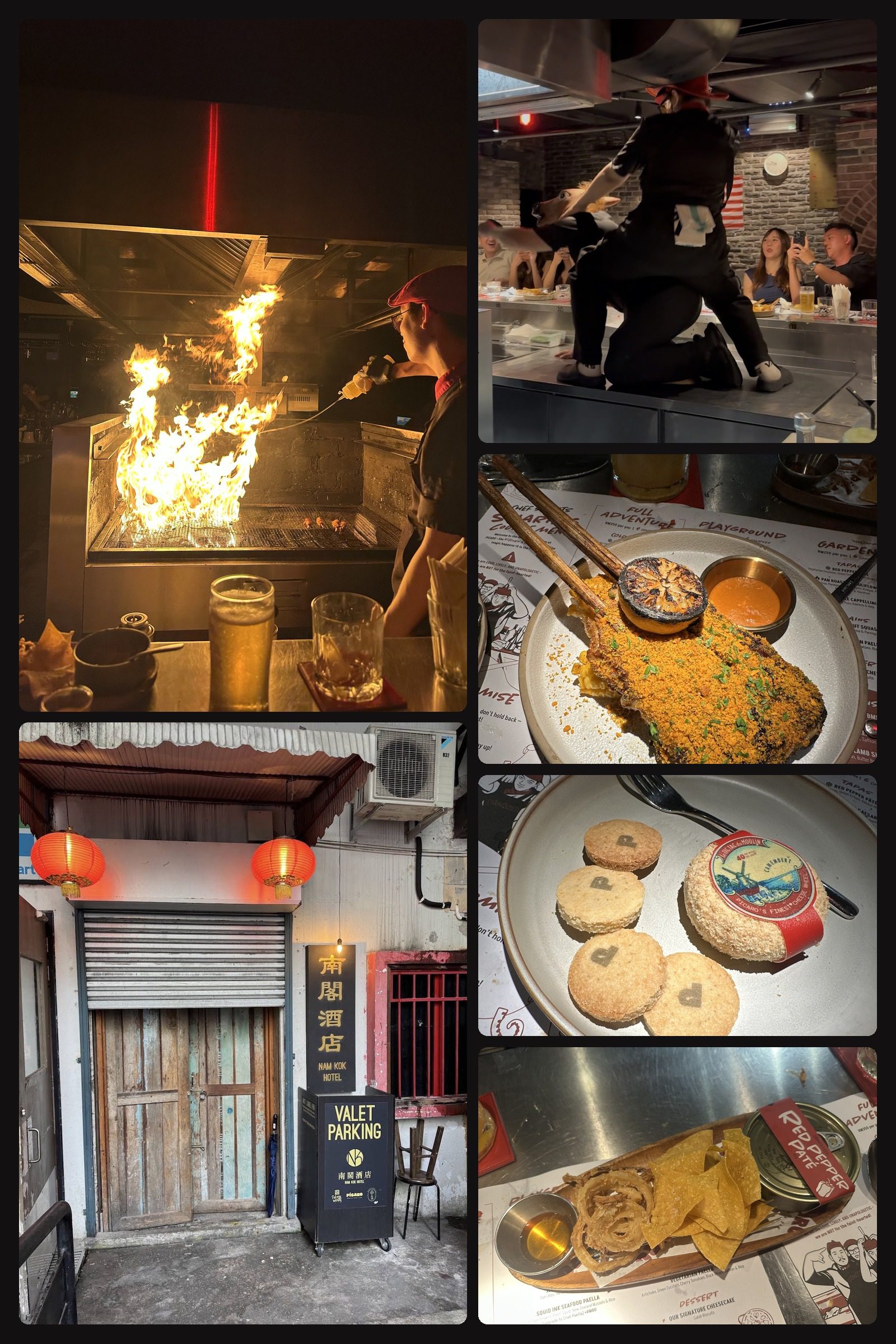
Eating is that one time of the day when you turn off and enjoy the food laid out in front of you. Picaro is different. Booming music, rotating drinking games, flirtatious waiters, free-flowing food. In other words, a bachelorette’s dream dinner.
Picaro sits behind a fake hotel front. A Chinese-decorated frontage, red lanterns glowing, a hotel sign hanging loose, someone sleeping down the alley it backs onto. To sum it up, it looks like a brothel.
Inside, you walk into a bank vault. A massive teddy bear in the centre, vault doors everywhere you look. It felt like a game show. Quickly hushed into a room full of leather sofas, a projector throwing a Roman painting up on the wall, other diners already waiting, sangria doing the rounds. If I was ever going to end up in a Saw film, or in The Menu, this was the moment. Spooky and on edge. Barely a word between people. All of us just sitting there, waiting to be seated for what felt like the last meal.
One by one, they took each group out of the room until it was my turn, out of the vault, through a curtain, and into the main room. A massive countertop sat in the middle, with staff stationed around it and seating for about thirty. The waiters were already dancing to the bass-heavy white girl music, working the room, picking out who the partygoers were and who to avoid. The waiters, who posed as chefs, wasted no time flirting with the young women. It already felt like a dating show.
It was a tasting menu built for sharing. Six courses, served as plates for two. First up was an anchovy emulsion with nachos, crispy onions, and honey, plated beautifully; the emulsion was served in a fake tinned can. That is when it clicked that this place is made for the ladies. The servers came round, hand-fed the women, and left the men rotting in jealousy. It was funny watching them whoop for the attention and lap up the novelty of being fed by good-looking young men. But the dip itself was superb, incredibly fresh, with a smoky note that soothed the throat like a glass of whisky.
The second course was a Caesar salad with raw tuna on top, and it was meh. Refreshing, but nothing I can praise. Wet and sludgy, and the fish felt wasted on it. I would have preferred the tuna as sashimi on its own plate rather than mixed through the leaves.
A constant source of entertainment on my right was a Grandad who hauled himself onto the table, rang the bell, and bellowed “YAAAM SENG!” before tipping his head back and necking a full glass of beer. He did it again and again all night, his wife beside him, head in her hands, blushing at the awkwardness. Then the shots started. Free shots, and who refuses something for free? Sweet liquor, progressively making the night a blur.
Next up, a smoked duck cheese toastie. Coming from someone who has perfected the cheese toastie, as plenty of my drunk friends will happily confirm, this one did not hit. The problem was the hot honey. The trendy pizza topping is muscling its way onto toasties now, and I am disappointed. Far too sweet. I like mine simple: cheese, maybe a touch of mustard, a hot sauce on the side. Do not overcomplicate it. Still, it was worth sitting through, because another anchovy dip arrived soon after. I had made it very clear the first was excellent, and lo and behold, a second appeared.
A couple more shots in, the music now vibrating behind my eyes, a whole chicken landed in front of me. Lightly crumbed, sprayed with charred lemon, ripped straight off the skewer and eaten Viking style. I dipped it in a suspiciously orange sauce, and it felt like cinema, the whole counter gnawing away like we were possessed. It was perfectly tender, and the waiters showed me why: they hurled what looked like a whole bottle of oil onto the chargrill in front of us; the fire went up in a wall of flame, and I felt my eyebrows crisp.
Free chicken skewers came next. More free food, and I was in no state to say no. It got me a little too excited, so I threw myself into a drinking game: two mugs of beer, linked to the person beside you, both drained in under six seconds. Win, and your drinks are free all night. Lose, and you pay RM99. I lost. The skewers, for the record, were just skewers. Pretty boring. But free again, so no complaints.
Finally, the one I had come for: seafood paella. By this point, I was so full that watching it arrive felt daunting. Squid ink rice, huge rings of squid, fat fresh prawns, and the kicker: they offered to peel the prawns for you. Now that is 5/5 service right there. Nobody wants their hands reeking of prawn for the next three days. The base was crisp, the rice rich and bouncy, crunching in my mouth. It was very mouth-watering.
The next bit of theatre would have given any HR department palpitations. A man stood up and worked his way round the counter, getting each of the women to tilt their heads back so he could free-pour sangria straight into their mouths. Entertaining enough to watch, at first. Then he reached my friend, who said no. He did not take no for an answer and tried to make her do it anyway. The room had tipped from playful into something with no boundaries at all. Making a customer dig in and repeat, firmly, that she does not want your booze poured down her throat is not a bit acceptable. It is wrong, and it is awful service.
Despite the sour note, pudding arrived and pulled things back. Cheesecake, but plated to look exactly like cheese and crackers, which was clever and the kind of sleight of hand you saw all night. Crisp where it needed to be, the cheesecake itself closer to soft serve than a dense slice.
I cannot compare Picaro to anywhere else I have eaten. It is an experience and an adventure rather than a sit-down, food-worthy meal. I feel it targets a certain crowd: young partiers, people who appreciate attention and games, people who want a buzz and can not sit still. It is an extrovert’s dream and an introvert’s nightmare. But definitely a great bachelorette dinner.
Clean signage, no English, a wooden bench perched outside like some takeaway joint. Menya Hanabi. A simple place. Clearly focused on efficiency and the food rather than anything extravagant. Step inside, and you hit a mass of solo diners. Heads down, slurping thick steaming noodles, thoughts pummelling through them. It felt like walking into an office where everyone hated each other and would rather eat alone. All suited up, hair over their eyes, no sudden movements, flinching at anything that brushed them.
The interior was interesting. Interesting in the way that makes you ask whether construction had actually finished. Plywood still exposed around the kitchen counters, wires and random chargers flailing loose, waiting to electrocute someone. Lamps hanging ajar overhead, primed for a head smack. But we are in Asia, and the staff flew around the place like the world had just ended. Sitting down, I felt thoroughly reassured this spot was the real thing.
The menu, well, nothing surprising. Couldn’t understand half of it, even though it was in English. The words were in Japanese. So I stepped back into my early days, staring at the pictures with my mouth open like I knew exactly what was in each dish. Went for the easy option. The one with a star next to it, taking up a whole page. The dish people come from far and wide for. The Nagoya Mazesoba.
Nagoya, not Taiwan, despite what the name leads you to believe. The thing was invented in Nagoya around 2008, a Japanese spin on a Taiwanese minced pork noodle, and from there it went chain shop, then global. Another dish quietly lifted, sharpened, and sold back to the world. The Japanese are good at that.
Small at 24RM, large at 26RM. Two ringgit between them, which felt like a con. Everyone’s sitting there with the big bowl. A cheeky little upsell. Had to add the gyozas, as always. You can tell a place by them.
The restaurant was filled with steam and chatter. Mostly the staff screaming across the room and the clash of pans in the kitchen. The food soon arrived. The mazesoba landing before the dumplings is always a bit odd, but food in front of you is a good sign regardless. The dish came neatly presented, each part walled off from the next. It reminded me of being a child, picking meals apart and taste testing before saving the best for last. That didn’t last long. Aesthetically I lifted the thick soba up to the roof before splatting it down, mixing the condiments into a thick sludge. The gloop of the noodles, coated generously in rich tangy sauce and minced beef, meant every bite was perfectly covered. The slurp, the gulp, the stained cheeks, the crunch of spring onions. A sensory masterclass. Every taste bud covered. The kind of meal where you could be drunk. Taste dialled up, eyes staring into nothing, no words, just slurping it down.
Then the goldmine. Still hungry? No need to fear. You get topped up with rice. Warm sticky rice, dropped into the bowl still slick with that thick, salty sauce. Mix it all together and you’ve got an incredible palate cleanser. Bowl left clean. Like a dog licking the leftovers off a plate.
The dumplings turned up annoyingly late and didn’t taste anywhere near the soba and rice. A let down, and it left a slightly flatter taste in my mouth on the way out. So, for future readers and restaurant goers, this spot is for the mazesoba and nothing else. Quick stop, clean the bowl, out you leave. Thirty minutes max. Satisfied and content with what you’ve just eaten.
Lorong Bandar 20, City Centre, 50000 Kuala Lumpur, Wilayah Persekutuan Kuala Lumpur
Taste – 6 Atmosphere – 8 Service – 7 Value – 9.6 (12rm/£2)
People talk about stepping into Narnia, a hidden world tucked behind a wardrobe. I get the same feeling slipping off Petaling Street, past the counterfeit handbags and fluorescent souvenirs, and into “paradise?”
There are no fauns here. No talking lions. Just a narrow, muddy alley that looks like it hasn’t been cleaned since the British left. The ground is slick, the air thick, with unknown liquids dripping from above. Rats dart. Cockroaches scatter. Feels post-apocalyptic.
And then, suddenly, it opens up.
A junction. A crowd. Steam rising. Plastic stools. Breakfast in full swing.
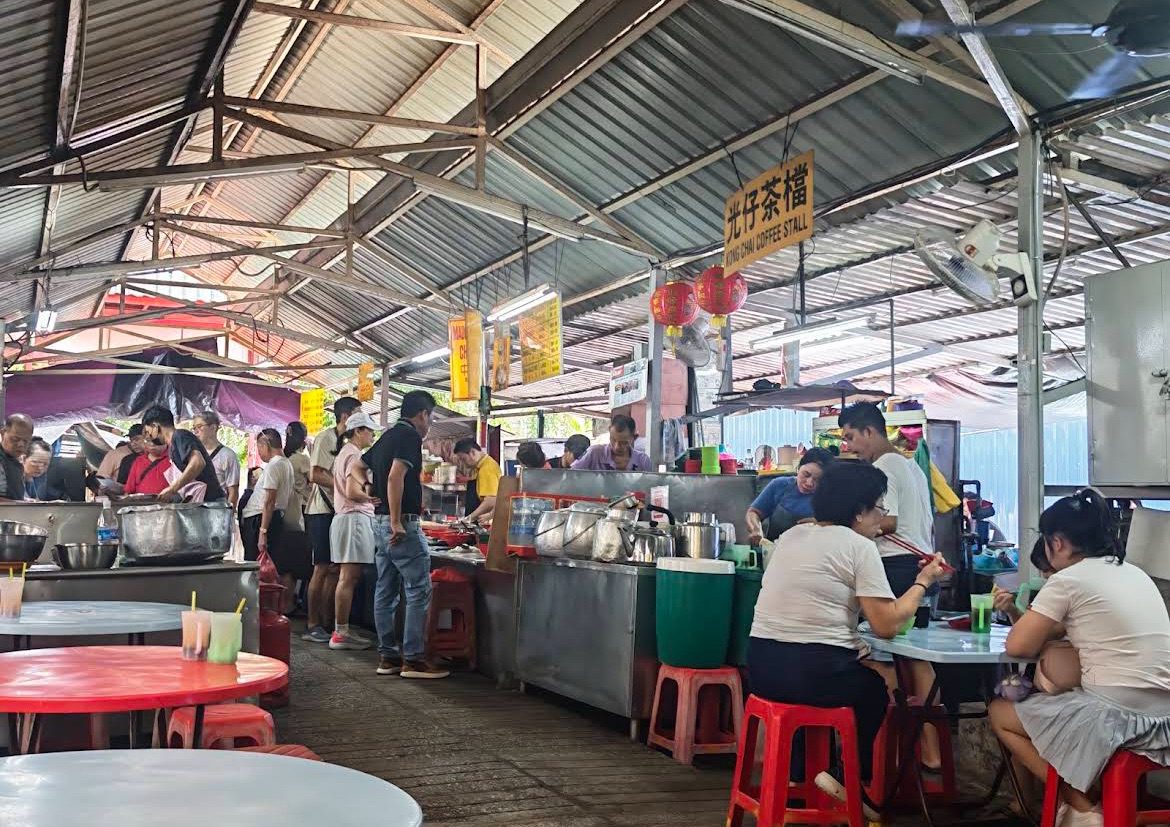
The stalls are run by the older generation – people who have been doing this for decades, maybe longer. No menus, no branding, no performance. Just repetition and muscle memory. Chee cheong fun at one stall. Curry laksa at another. Yong tau foo and curry mee are anchoring the rest. Everything revolves around the same idea: hot broth and deep flavour. Feels like it could cure any illness.
At first, it makes no sense.
It’s not a restaurant. Not quite a stall either. You don’t order, you assemble. Step up, point, nod, hope for the best. Most of what’s on display is unlabelled and, to the untrained eye, unidentifiable. The safest strategy is simple: watch the locals and copy.
Then it’s your turn.
You step forward. Suddenly, it’s high pressure. The line moves fast, and hesitation is not appreciated. Noodles; thin or thick. That’s your only real decision. After that, just gesture vaguely at everything and commit. Within seconds, it’s done. A ladle of curry broth floods the bowl, releasing a dense, spiced aroma that briefly overpowers the surrounding drains.
You take your bowl and sit somewhere between a plastic stool and a drainage system. If it rains, you suspect this entire place might disappear under water. It feels temporary. Almost illegal. The kind of situation where, if the police suddenly appeared around the corner, everything could disappear in the blink of an eye.
And maybe it is.
There’s talk that places like this are being pushed out; too messy, too real, not the kind of “authentic” that tourism boards like to advertise. Once, there were dozens of these stalls. Now, just a handful remain.
The first bite is a mistake. Scalding. Mouth-burning. Instantly regretted. The spice doesn’t help; it hits fast and sits heavy.
The broth itself is thinner than expected, but loaded with flavour. Imagine your favourite curry stretched into a soup, less intensity, more depth. It clings to everything.
You don’t really know what you’re eating. You discover it mid-bite. Aubergine, soft but still holding shape, soaking up the broth until it bursts slightly under pressure. Perfect. Then something else, a pale, ambiguous strip that looks promising but collapses into a chewy, sponge-like nothing. Pork skin, apparently. Not everything is a win.
The meatballs arrive with familiar mystery. Soft to the point of suspicion. Barely flavoured on their own, but excellent carriers for the broth.
And then, unexpectedly, the best thing in the bowl: potato.
It shouldn’t stand out, but it does. In a sea of unknowns, it’s recognisable. Reliable. A small, quiet reminder of home.
By the end, the verdict is clear.
Is it different? Yes. Adventurous? Definitely. Satisfying? Not entirely. Authentic? Completely.
If you want to understand what Chinatown in Kuala Lumpur used to be, before the polish, before the curation, this is where you come.
Malaysia carries a kind of quiet generosity. It is a country remarkably open to different ethnicities and religions, welcoming to people of every shape, size, and story. There is a calm friendliness to it all, a gentle ease that makes you wonder why the rest of the world can’t manage the same thing.
That openness became especially clear when Ramadan arrived. The truth was, I knew absolutely nothing. I felt like a bee flying straight into a storm. The idea of dry fasting for an entire month sounded, to my very Western brain, slightly insane, and I couldn’t help wondering why anyone would willingly put themselves through it. But what surprised me most was how unawkward it all was. You ask questions that must sound painfully obvious to your Muslim friends, yet instead of annoyance, you’re met with genuine warmth. There’s a grin, almost a quiet pride, in knowing that some clueless Westerner actually wants to understand Islam a little better. And in many ways, Ramadan is the best time to start asking.
But what is the best way to experience Ramadan? Do it!
I am not saying commit to the full 29/30 days, but try doing one. This is exactly what I did. You will procrastinate on it because it takes a lot of effort, but just do it!
Waking up at 5:30am is the first challenge. In Malaysia, where it consistently gets light at 6:30am, it’s a tough start. Being awake for Suhoor is vital. This is the meal you consume before the crack of dawn. Usually, whatever satisfies you, but it needs to be a hearty meal that gives you energy to survive the whole day. I consumed a healthy portion of yoghurt, granola and honey, with dates to fill the rest of my stomach. And oh my, dates are something to admire. Not widely consumed in Western culture, they provide significant nutritional value and effective hydration. Pretty much a super food in my eyes.
Now revived and ready to embrace a day of noble starvation and slow dehydration, I set off. The morning was harmless enough. Quiet. Manageable. The sort of calm that tricks you into thinking you’ve got this whole fasting thing under control.
The trouble begins when other people start eating. Someone cracks open a drink, another unwraps something greasy and fragrant, and suddenly your body betrays you. Your mouth floods with saliva like a dam ready to burst. You’re no longer a rational adult; you’re a wolf eyeing up a particularly oblivious lamb. Routine becomes a kind of torture. The habits you never noticed, snacking and mindless bites, taunt you. Friends, of course, find this hilarious. They eat louder. Slower. It’s character building, apparently. And in a way, it is, this quiet test of restraint, the stubborn refusal to give in.
But the real reckoning arrives mid-afternoon.
Around 3pm, I ceased to function as a human being. Thoughts slowed to a crawl. Movement felt optional. Speech, ambitious. I lay there, half-conscious, watching dreadful daytime television, contemplating whether merging permanently with the mattress might be the better option. Time stretched, warped, refused to move at any respectable pace.
And then, finally, salvation.
When the moment comes, it comes fast. One minute you’re a shell of a person, the next you’re vertical, alert, and halfway out the door with the urgency of a man who’s just remembered he left the oven on. Destination: the bazaar.
The evening bazaar beside the steel mosque in Putrajaya is less a market and more a full-contact sport. By 6:15, it’s already in full swing; crowds surging, bodies weaving, a low-level chaos that feels oddly coordinated. It’s like a children’s mosh pit, but everyone’s holding food and nobody’s entirely sure where they’re going.
There are stalls, hundreds, it seems, spilling out everything from the Malaysian canon to global cameos. Nasi lemak, roti canai, and roti john sit proudly alongside fried chicken, burgers, and the occasional confused attempt at Japanese or Western fare. Ignore those. They’re distractions. You didn’t fast all day for a mediocre burger. Stick to the local playbook. Anything with “nasi” in the name is a good place to start.
I went for nasi ganja. An alarming name, admittedly, and a handful of curry puffs, which I can only describe as what might happen if a Cornish pasty went travelling; Spiced potatoes, crisp pastry, deeply satisfying.
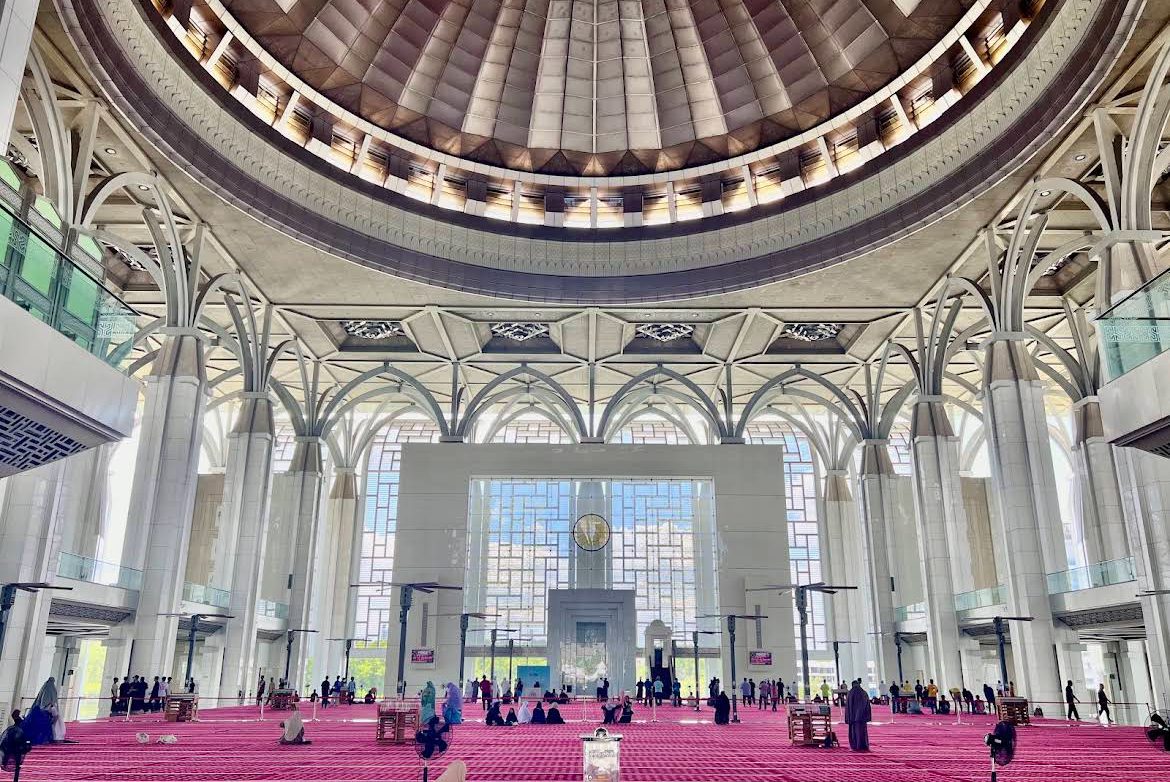
Now, crucially: you don’t eat. Not yet. However much your body protests, there are rules. It’s considered poor form to dive in before sunset. So you find a place to sit, ideally somewhere by the river behind the mosque, where the crowd softens into something calmer. People gather, families unpack, conversations hum quietly. Across the water, the pink mosque glows in the fading light, and for a moment, everything feels suspended. Waiting.
Then you hear it.
At first distant, a voice rising, stretching across the air. Then another, and another, each call to prayer echoing from different mosques, building, overlapping, rolling forward like a slow, melodic Mexican wave. It gathers strength, moves through the city, until it reaches you.
And just like that, it’s time.
No ceremony, no hesitation. Hands in, no cutlery, guided by the now-essential three-finger technique. The first bite of nasi ganja lands like a revelation; rich, spiced, deeply comforting, the kind of flavour that makes you briefly question why you ever ate casually before. The chicken is crisp and tender. Every taste feels heightened, borderline overwhelming, as if your senses have been waiting all day for this exact moment.
The curry puffs follow. A crunch giving way to soft, spiced filling. And then the watermelon juice: cold, sweet, impossibly refreshing. It doesn’t just quench thirst; it resets you entirely. You go from hollow to human again in a matter of minutes.
This is where things take a turn from curious observer to something far more personal, an experience that feels, in every sense, once-in-a-lifetime. The invitation to pray. Not to watch, not to hover awkwardly at the edges, but to step in and take part. It’s equal parts humbling and disorienting. If you’d told me six months ago, back in the UK, that I’d be doing this, I’d have laughed it off.
But here we are.
It’s Maghrib, the fourth prayer of the day, and by all accounts the busiest. The steel mosque swells with people, a steady current of bodies moving with purpose. And then there’s me, conspicuous, slightly stiff, acutely aware of every glance. Not hostile, just curious. Still, it carries that feeling of having wandered into someone else’s living room uninvited.
Luckily, I’m not alone. My friend acts as both guide and buffer, easing me through the rituals with a calm familiarity. First comes Wudu – the act of washing. Hands, mouth, nose, face, arms, feet. Three times each. Methodical, almost meditative.
Then into the mosque itself.
It opens up suddenly – vast, airy, serene. The space hums, but softly. There’s a warmth to it, not just physical but atmospheric, like the building itself understands why people are here. You fall into line, shoulder to shoulder, strangers but not separate. The prayer begins, and I do what any sensible outsider does: follow. Movements, pauses, the rhythm of it all.
When it ends, there’s no grand moment. No revelation. Just a quiet sense of having been allowed in, however briefly, to something meaningful. And that is enough.
Stepping outside later, around 9pm, the atmosphere has changed again. The mosque grounds are alive, families gathered in clusters, friends sprawled out on the grass, laughter cutting through the warm night air. There’s food, chatter, the easy comfort of people simply being together. It’s familiar in a distant way, like a rare sunny afternoon in the UK when everyone flocks to the park.
Ramadan, as it turns out, isn’t really about the absence of food or drink. That’s just the headline. The real story is everything that fills the gaps in between – the patience, the small battles with yourself, the quiet recalibration of what you need versus what you think you need. It strips things back, then builds them up again, a little more honestly.
And somewhere between the hunger, the waiting, the shared meals, and moments like that prayer, you realise it’s not about becoming someone else. It’s about meeting yourself, properly, perhaps for the first time in a while, and finding that you’re a little more resilient, a little more aware, and a lot more human than you’d given yourself credit for.
Shin Zushi: Taste – 8.4 Atmosphere – 8.1 Service – 5.8 Value – 8.3 Address: No .12G, Jalan, Persiaran Puteri 1, Bandar Puteri, 47100 Puchong, Selangor
Toriya: Taste – 7.4 Atmosphere – 7 Service – 8 Value – 7 Address: 12A-G, Persiaran Puteri 1, Bandar Puteri, 47100 Puchong, Selangor
Sushi, ramen, tempura, yakitori, soba, tonkatsu. The Japanese know what they’re doing. Few cuisines manage to produce so many global favourites, each one capable of converting even the most stubborn eater. Travel to Japan with the fussiest companion, and there will always be something they fall for.
And then there are the people. Step through the door of a Japanese restaurant, and a chorus erupts. A loud, perfectly practised “Irasshaimase!” from the staff, like an unrhymed choir. Heads turn. Diners glance up. And there you are, briefly on stage, standing awkwardly in the doorway and doing your best not to make eye contact with anyone.
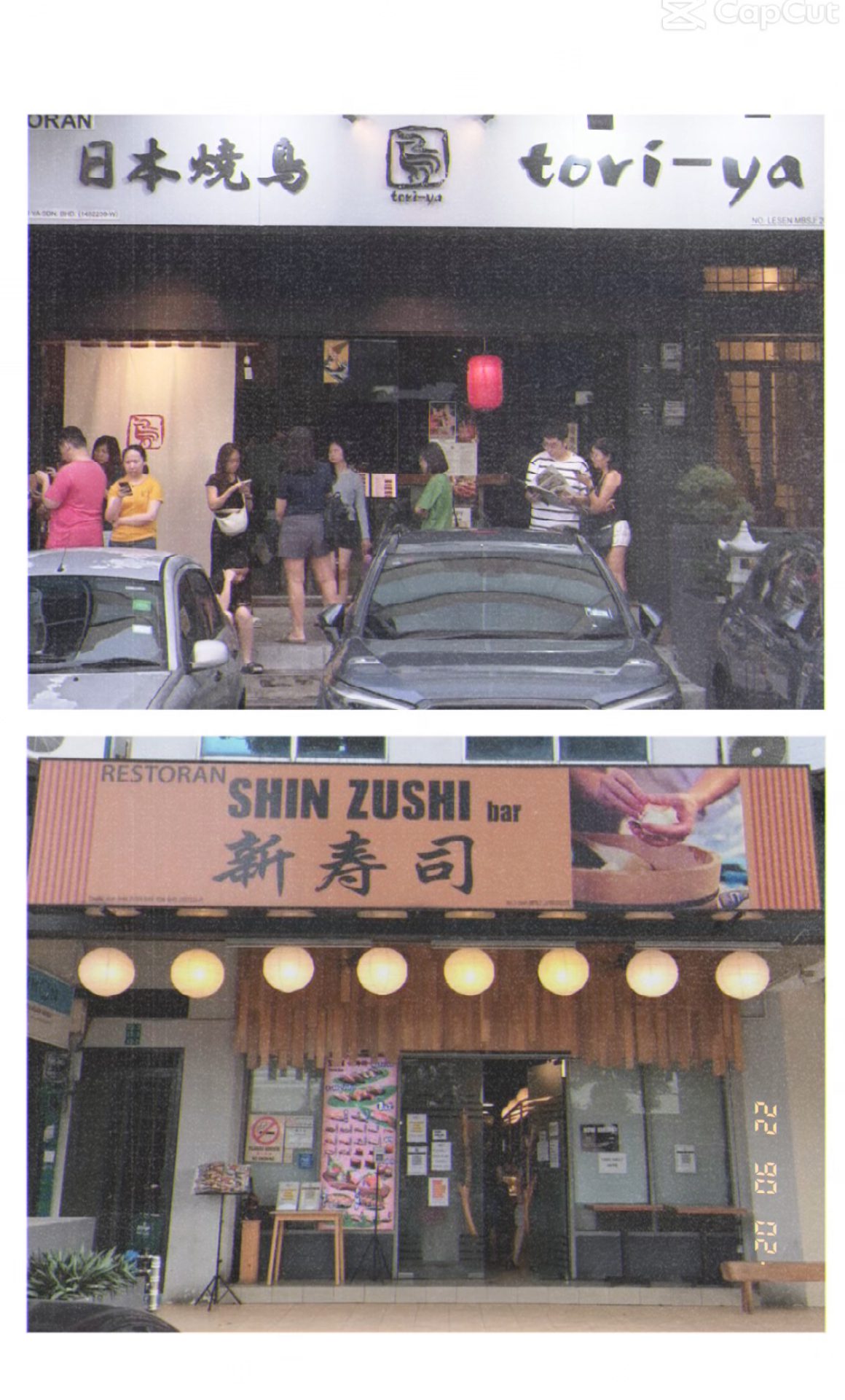
It’s this small theatre of hospitality, alongside the food itself, that places like Shin Zushi and Toriya Yakitori in Puchong aim to bring to Kuala Lumpur: a slice of the Japanese dining experience.
Both are situated right next door to each other: Shin Zushi focuses on affordable, high-quality sushi and sashimi, whilst Toriya is a bit more classy, serving bar-top yakitori. It is perfect for that indecisive group that can never make up their mind in advance. All you need to know is that you feel like a Japanese person, then rock up and decide which one you feel like in the moment.
Shin Zushi is a popular spot, and they make no attempt to hide it. Reservations aren’t allowed, so queues are part of the ritual. The system, however, is mercifully practical: take a number and wander off while you wait. Around the corner sits a slightly questionable Chinese bar where you can pass the time, perhaps over a drink, or even lose badly at pool to a pot-bellied local.
Back at the restaurant, the atmosphere is lively, almost chaotic. The interior is simple; beige walls are scattered with Japanese writing, while staff move briskly between tightly packed tables. It feels uncomplicated, with a low hum of chatter that reminded me of the kind of casual neighbourhood spots you stumble upon in Japan.
Yet the welcome doesn’t quite match the setting. The obligatory chorus of “irasshaimase” rings out when you enter, but beyond that, the service feels curt and slightly inattentive. At one point, we were asked to leave before we had even finished eating, despite being there for less than an hour and a half. It felt abrupt, particularly given that ordering itself required little effort from the staff; everything was done through a QR code, leaving them mainly to deliver dishes to the table.
Still, if the service feels like an afterthought, the kitchen certainly doesn’t. The food is where Shin Zushi truly shines. Japanese restaurants outside Japan can often leave me slightly underwhelmed, the price rarely matching the experience. Here, though, the opposite was true. The dishes were surprisingly affordable, yet easily comparable to what you might find in a polished sushi bar in central London.
The sashimi arrived freshly sliced and beautifully chilled, laid neatly over a bed of shaved ice. Whitefin tuna, bluefin tuna, and salmon, each piece smooth, delicate, and clean on the palate, letting the natural sweetness of the fish speak for itself.
The nigiri offered a wide range of cuts, each resting on a neat cushion of rice: soft yet firm, perfectly vinegared, and still faintly warm from the master’s hand that had just shaped it. The maki rolls are always a mystery. I never quite know what goes into these elaborate constructions, but the flavours are always there, bouncing around the tongue before settling into something warm and deeply satisfying.
But the surprise winner of the day was the steak. I never order steak, especially at a place that clearly lives and breathes sushi and sashimi. Yet there it was. Thin slices, impossibly tender, served with a warm Asian-leaning sauce that wrapped around the meat like a particularly affectionate polar bear. It left me momentarily speechless. At 50 RM, it’s a must. There are steakhouses that would struggle to do better.
Another unexpected delight: the unlimited wasabi. It turns the table into a sort of informal competition, who can swallow the most in a single bite without their sinuses detonating and causing a scene in the restaurant.
On the other hand, you have Toriya. A much classier establishment, though the same ritual applies. The chorus of “Irasshaimase!” upon entering is, I would say, marginally better than Shin Sushi’s; slightly sharper in pitch, more unified. One suspects there could be a competition for this somewhere. I’m amazed that one of the crazy Japanese game shows has not done it.
The aesthetics are the complete opposite: black walls, minimalist tables, and staff standing perfectly poised behind the counter. Everything is hushed. The acoustics are so carefully managed that you barely hear the other diners, making it an excellent date spot.
The menu is extensive, as yakitori menus tend to be. Every possible cut of chicken seems to appear somewhere. Give them time, and I suspect the menu might include suspicious cuts of animals. Mercifully, Toriya simplifies things by offering tasting menus — 12-, 10-, or 7-course, each moving you through different parts of the chicken.
It’s a far more respectful approach to the animal than our Western habit of extracting the breast and leg and declaring the job done. Watching the skewers being cooked and presented directly in front of you adds a sense of theatre to the meal as well. Although it looks simple, I can tell I would burn the shit out of it.
My personal favourite is always the chicken heart: rich but not aggressively metallic like liver. I often encourage sceptical friends to try it. They usually approach with suspicion and leave pleasantly surprised.
The most unusual skewer, however, was saved for last, an immature egg yolk still attached to a section of fallopian tube. It was alarming. The yolk, bright and golden like a miniature sun, bursts in the mouth, while the tube provides a chewy counterpoint. It’s strange, but also fascinating. The sort of thing you never expect to eat, but are always curious to go back to try it again.
A bowl of soft, comforting rice followed, rounding things off, with the option of homemade ice cream to finish, a tidy ending to a rather adventurous meal.
The only slight downside was the seasoning. Some skewers leaned heavily on salt. Yakitori is, of course, designed to accompany generous quantities of alcohol, which may explain it, but at times the balance tipped a little too far, and a deeper glaze or sauce might have softened the blow.
Still, both restaurants offer experiences that leave you happily full. Shin Sushi is straightforward pleasure, clean, and simple. Toriya, meanwhile, is the more immersive affair, a slow exploration through the lesser-known corners of a meat.
No 48 G&M, Jalan Medan Setia 2, Bukit Damansara, 50490 Kuala Lumpur, Federal Territory of Kuala Lumpur
Taste – 7.2 Atmosphere – 7.4 Service – 5.2 Value – 7
Sri Lankan food is better than Indian food. Cue the outrage, the keyboard warriors, the aunties clutching their spice tins. But hear me out: it’s fresher, lighter, and far less likely to send you sprinting to the bathroom. Unlike its heavier North Indian cousin, it doesn’t leave you bloated, sluggish, or spiritually defeated. It’s food you can eat and still function afterwards.
Which begs the question: why aren’t there more Sri Lankan restaurants? Why does Indian cuisine monopolise every high street from London to KL? The answer, most likely, is population. 1.5 billion Indians have carried their food far and wide, while Sri Lanka remains an underrated culinary gem waiting for its global moment.
So when I heard about a Michelin Bib Gourmand Sri Lankan spot tucked away in Kuala Lumpur, my curiosity was instantly piqued. Aliyaa sits in one of KL’s odd, mismatched pockets. A so-called party strip lined with a British pub, a couple of clubs, and late-night burger stalls. It feels like the wrong restaurant in the right place: white tablecloths, soft lighting, the sort of setup that prepares you for foie gras.
The menu, however, is charmingly bare and cryptic. Sri Lankan dish names are offered without a single clue as to what they might actually be. A little description would’ve gone a long way. As it stood, it was culinary roulette.
Ordering drinks shouldn’t have been difficult, but somehow it was. Asking for water turned into an unexpected piece of dinner theatre. I felt like a confused tourist negotiating a burger with no pickles, except all I wanted was water. We eventually got there, after some laughs and a few too many apologies.
The food itself required less diplomacy. We ordered a spread of dishes we couldn’t pronounce, and Google became our silent third diner. We thought about asking for recommendations, but given the water saga, we decided not to push our luck.
I’ve always loved the chaos of everything arriving at once, a table full of dishes you grab, swap, steal, and share. So when I noticed the table next to us guarding their plates like a Gavin and Stacey curry-night reenactment, I wanted to tell them: are your stomachs not bored? It keeps your palate awake instead of hammering it with the same bite on loop.
We ordered a selective range: chicken sothie, fish poriyal, tempered okra, pol roti, and Ceylon roti. The chicken sothie was the instant star; deep red, clearly simmered into mellow perfection, rich but not heavy. The chicken was tender, the sauce fragrant and creamy without a hint of clag. Made for a perfect mop up with the selection of rotis.
The pol roti was interesting. Coconutty and dense, it drifted into chewiness, losing a little freshness and edging toward overdone. Still flavourful and unique, but not at its best. The same goes for the Ceylon roti, which was just slightly chewy but had a nice buttery flavour.
The fish poriyal, on the other hand, was the knockout I didn’t see coming. It looked plain, like the sort of fried fish you’d get on a tired weekday in Britain. But one bite in, and it was a revelation: meaty, moist, lightly crisp, with a gentle herb coating and just enough oil to avoid greasiness.
And then the okra, my forever favourite underrated vegetable. No, I can’t explain the slimy goo situation; yes, it’s part of the charm. Aliyaa’s okra was exceptional: cooked with onions, garlic, and subtle spices I couldn’t name but definitely appreciated. Bright, savoury, refreshing—the perfect palate cleanser between richer dishes.
In the end, Aliyaa does something rare in KL: surrounded by curry spots, it gives you a curry experience that doesn’t weigh you down. It proves that spice, richness, and refreshment can coexist, that curry doesn’t have to be a gut-punch. For around 180RM, including drinks, you get thoughtful flavours, a relaxed atmosphere, and dishes that leave you comfortably full rather than comatose.
69 Jalan Thambipillay, Brickfields, 50470 Kuala Lumpur, Malaysia
Chain restaurants are usually the culinary equivalent of a shrug, food that tries hard to please everyone and ends up pleasing no one. Every so often, though, a chain refuses to be a place of average cuisine: Din Tai Fung, the Mandarin Oriental, and MTR 1924, which have all quietly kept their soul intact.
MTR 1924 has been doing its thing for more than a century, and you can feel that longevity in every plate. The Kuala Lumpur outpost, tucked among the familiar faces of Brickfields, wears a modern coat. A red neon sign throws an almost conspiratorial glow; floor-to-ceiling glass lets you peer into the choreography of the place. The walls are papered with photographs: sepia beginnings in Southern India, proud snapshots of the past. It’s a museum that still feeds you.
They greet you with broad smiles and a cup of traditional filtered coffee. For a moment, you are treated like royalty (possibly something to do with my colour, but we will move past that). The service is warm and efficient, what more can you ask for?
The menu reads like a cookbook: long, detailed, and occasionally baffling. There’s a curious calendar to it, certain dishes only available on certain days and at certain hours. Lemon rice, for instance, is a Monday morning treat; try ordering it on a Tuesday, and you’ll be politely rebuffed. It feels exclusive in a way that’s half charm, half logistical: either they’re preserving tradition, or they’re saving themselves the bother of cooking everything every day. Either way, it keeps you coming back to find out what’s on offer next.
The masala dosa arrives like a small theatrical production, a vast, golden triangle draped over the plate, its edges hanging like a perfectly browned samosa. The exterior snaps with a buttery crunch, then gives way to a thin, almost pancake-like layer that conceals spiced potatoes: succulent and comforting. I asked why it hooked me so fast; the answer was simple: ghee, clarified butter, which bathes every fold in rich, lingering fat and lets the modest spices show their voice. It comes with a bright, green chutney and a lentil sambal that brings a clean, cheeky kick.
The rice Idlis arrive like soft white clouds, the dish MTR is famous for and for good reason. They’re pillowy, with a faint tang, and a texture that soaks up chutneys and sambals the way those scrub daddy sponges sweep up a wet mess instantly. Pair one with a cheeky beer and watch it dutifully absorb the booze and the mood, turning a snack into a small celebration.
By the time the masala vada turned up, I was stuffed. The concept is simple and brilliant: a fried fritter built from split chickpeas and spiced accordingly. This one, sadly, was off-key. The spices were present, but the texture was dry, like biting into a grandma’s stale cakes. The oil tasted tired and faintly burnt, which killed the pleasure. Credit where it’s due: a minty, creamy dip rescued each mouthful, masking the char and rehydrating the experience enough to make it worth finishing.
Wherever you find yourself, in London, Singapore, Dubai, etc, MTR 1924 brings the honest flavours of South India. The exterior may be modest, even a little rough around the edges, but these are the places that do the heavy lifting: simple, soulful food. In Kuala Lumpur, my bill came to a modest 40 ringgit (about £7), and that spread could easily feed two or three people.
4810-0-39&40, CBD perdana, 2, Persiaran Flora, Cyberjaya, 63000 Cyberjaya, Selangor
Taste – 8.2 Atmosphere – 4.5 Service – 5.1 Value – 8.3 (Around £4-6 (20 Ringgit))
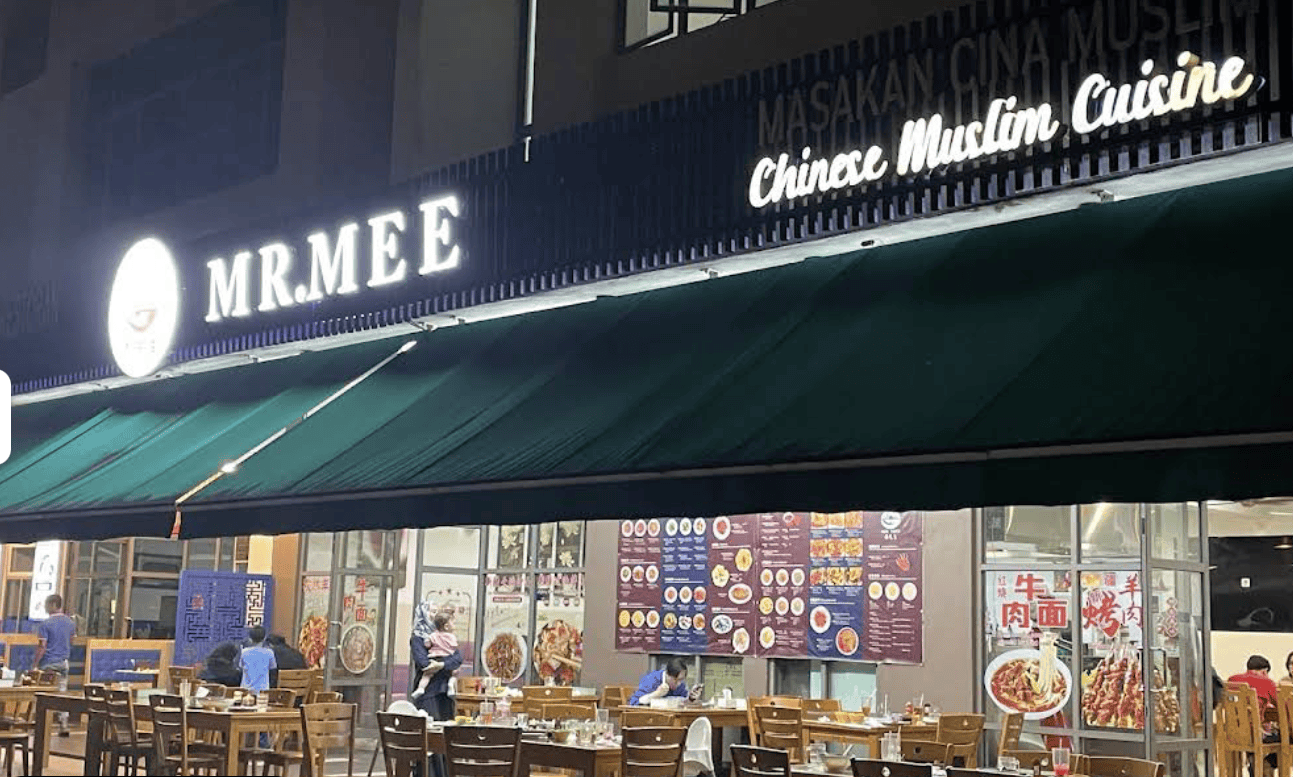
Being from the UK, I’ve watched my expectations of Chinese food steadily erode over the years. London’s Chinatown, once a haven of smoky, late-night brilliance, now feels like a showroom for TikTok’s latest edible stunts. It’s the old adage: America has Chinese food, Britain has Indian, and I agree. In the UK, finding proper Chinese food beyond the usual chow mein and dim sum isn’t easy. That’s not to say there aren’t a few brilliant spots serving real delicacies – they’re just few and far between. So, arriving at Mr Mee in Kuala Lumpur, my mindset was simple: I’d take anything that wouldn’t make me ill and didn’t taste like a sad echo of London’s Chinatown. Before entering, I circled the place a few times to build up some confidence. To anyone watching, though, I probably looked like I was casing the joint, especially with a bank right next door. Ignoring the curious glances around me, I walked in like I owned the place – straight to the centre table, leg stretched out, like it was my regular spot and I was Mr Mee himself. Dim, soulless, and oddly clinical. The decor was unsettling – tables were scattered in a strange formation, and the lighting was so harsh that it felt like I was preparing for surgery. Most people chose to sit outside, and in hindsight, I probably should’ve joined them. But I’d already made my entrance, planted myself dead centre, and couldn’t exactly slink back out to safety. If I was going to understand this place – its food, its mood – I had to stay put and face it head-on.
The menu was impressively diverse, featuring not only Chinese cuisine but also dishes unfamiliar to me—some even reminiscent of Middle Eastern fare, like succulent lamb skewers. This called for some serious soul-searching, channelling my inner Mr Mee, pondering life’s great mysteries. First dilemma: what’s the most obscure yet delicious thing on this menu? Easy. Lamb skewers that whispered Middle Eastern secrets, and a noodle dish that looked stunning in the photos (but let’s be honest, pictures are professional liars). I threw in a watermelon juice for good measure, hoping it might perform a miracle on my jet lag. A bold move for a first meal, considering the ice came from parts unknown.
The “noodles” arrived looking suspiciously like spaghetti. A glorious heap of it, tangled with tender chicken bits, fiery chillies, cracked pepper, juicy tomatoes, and drenched in a rich, dark sauce. One slurp in, and the bounce told me these strands were made fresh, in-house. The spice had a crisp kick that danced beautifully with my cold watermelon juice (a perfect pairing). The tomato-based sauce added an Asian twist with a cheeky nod to Italy.
Then came the surprise: two lamb skewers, still sizzling on their sticks, crisp from a coal-fired char. Generously brushed with a spicy, rich marinade, the lamb practically slid off the skewer; tender, sweet, fiery, bursting with flavour. I’m usually lukewarm on lamb; it’s hard to find cuts that are juicy, tender, and actually taste like something. But Mr Mee? He delivered one of the most memorable lamb dishes I’ve ever encountered.
Mr Mee proved a vital culinary truth: the most unassuming, borderline dingy spots often hide the boldest, most unforgettable flavours. No need for fancy plating or Instagrammable interiors, when the food hits, nothing else matters. And the price? A jaw-dropping £6, even after picking some of the priciest items on the menu. If you find yourself in Kuala Lumpur (especially around Cyberjaya), do yourself a favour and make the pilgrimage.