Perry Court Farm, Canterbury Rd, Wye, Ashford TN25 4ES
Taste – 8.1 Atmosphere – 8.4 Service – 7 Value – 6.9 (£20pp)
We saw it. A new Asian restaurant, wedged between a fishmonger’s and a farm shop, down a one-way lane that opens onto a courtyard holding an art studio and, for good measure, a jungle garden. For Kent’s countryside contingent, this is the full posh Saturday circuit in one stop: fresh fish, a butcher’s, a cheese counter, and now, dumplings.
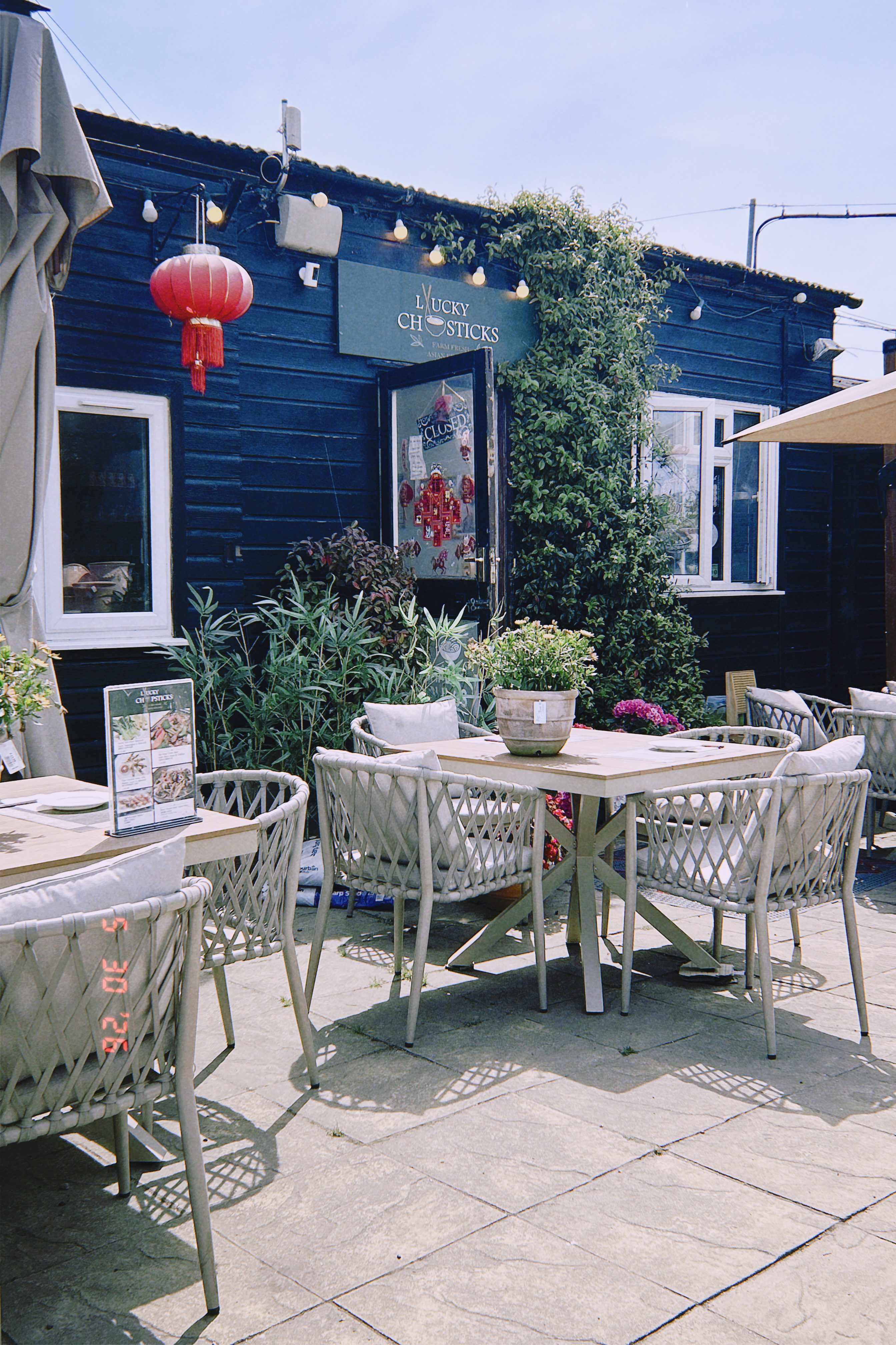
Lucky Chopsticks sits in the middle of all that Britishness, looking like two design briefs had an argument and both won. Decking chairs and English flowers outside; pale, creamy wood and Chinese lanterns within and bar tables delicately placed with orchids.
The owner brought the menus herself, clutching them to her chest, and set them down with a grin like Mater from Cars. The menu itself was a thick folder of loose sheets, shuffled and reshuffled in front of us as if she were building a case file. Mostly Japanese and Chinese dishes, broad enough to please the fussy and satisfy the adventurous.
Everything took longer than expected, but a kitchen which has just opened with one chef earns a bit of patience. I didn’t mind. Green tea, rare British sun, and old couples drifting past toward the farm shop, cooing at the plants like they’d never seen a fern before.
First up: cucumber salad and dumplings. I’ve eaten enough cucumber salad at Din Tai Fung to have opinions, and this one held its own: cucumbers smashed just enough to weep their juices into the vinegar, with a chilli kick sharp enough to make you pull a fish face. The dumplings, chicken and corn (an odd but reliable Chinese staple) came thick-skinned and sweet, the filling bursting with more juice than the wrapper could hold.
Then the Har Gow. Soft prawns that gave way the second they hit your tongue, wrappers cooked to just the right side of translucent: the kind of dumpling that makes cheaper versions elsewhere look like an insult. Someone in the kitchen, for reasons known only to them, had crowned each one with a single boiled floret of broccoli. A strange flourish. I let it go.
The Sichuan red-braised beef noodles and the beef chow mein arrived built for a rugby team. The chow mein came dark and glossy, thin beef slicked through a sauce so thick it clung to every strand and refused to let go, and neither did I. The noodle broth underneath was deep and slow-cooked, tasting like somebody’s grandmother had been quietly simmering it since sunrise with absolutely no intention of sharing the recipe.
Lucky Chopsticks has no business working as well as it does: a Chinese-Japanese kitchen wedged between a fishmonger and a farm shop, run by a woman who still smiles like she can’t believe her luck. None of it should work. All of it does. I’ll be back long before that broccoli garnish starts making any sense.
Taste – 8 Atmosphere – 5.6 Service – 9.6 Value – 9.3 (11,000riel/£2)
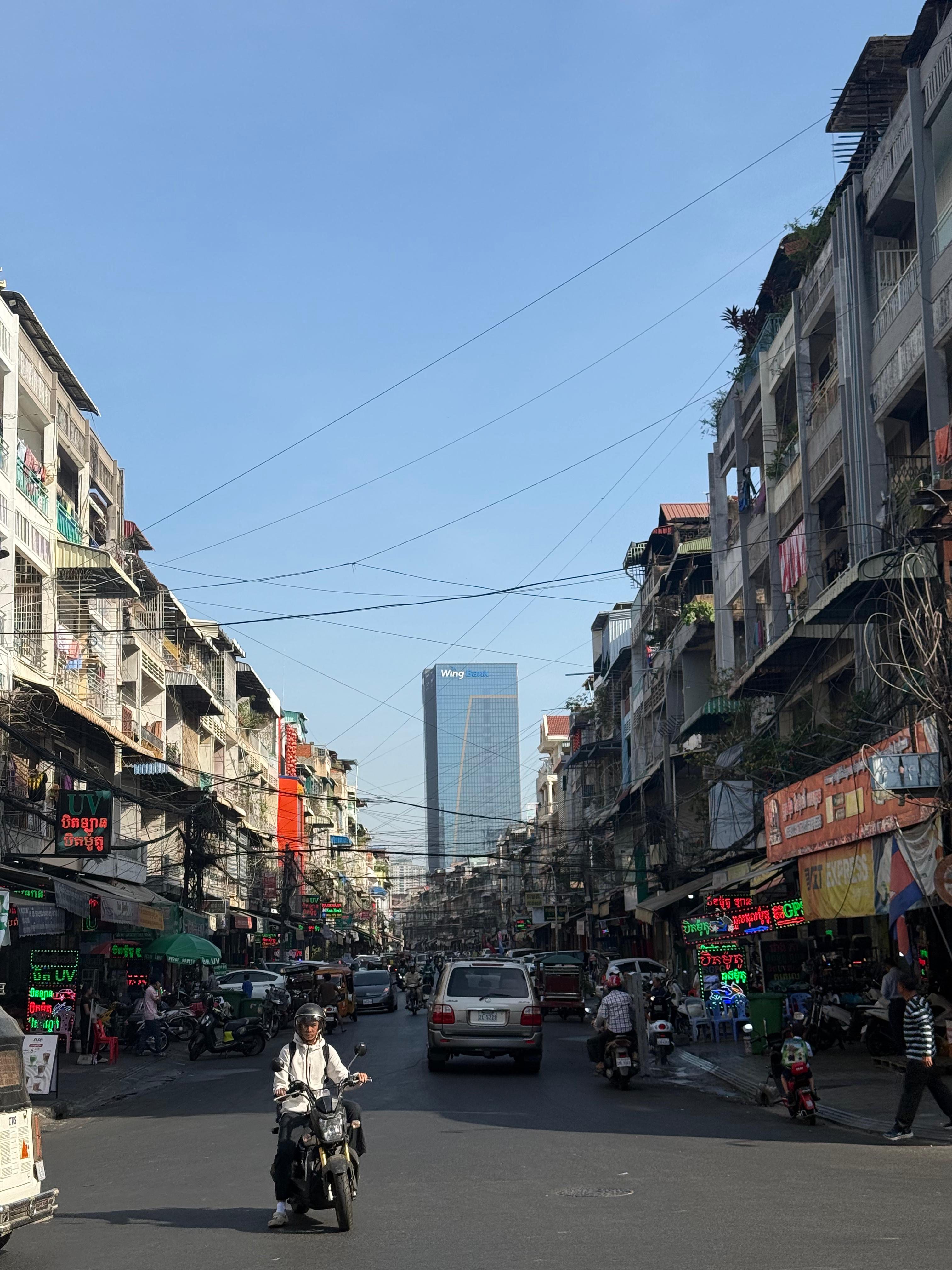
Phnom Penh is a city that has lived several different lives. War zone, ghost town, Chinese investment project, and now, reluctantly, a tourist destination. The strange part is that the city still hasn’t fully realised tourists are here. You walk past packed restaurants full of locals, look them up online later, and discover they barely exist on the internet. No reviews. No curated interiors. No carefully engineered “local experience.”
Good.
Somehow, we’ve decided food should now be filtered through strangers. But what does their opinion actually tell you? You don’t know how they live, what they eat, whether they think mayonnaise is spicy, or if they leave one-star reviews because the waiter didn’t smile enough.
Phnom Penh felt refreshing for exactly that reason. Like stepping backwards into the kind of world my parents talk about with nostalgia.
So naturally, curiosity took over.
It was lunchtime. We’d just abandoned a perfectly good Western café after deciding we couldn’t face another overpriced eggs-on-sourdough situation. Instead, we wandered through the city: past gleaming luxury car dealerships, men pissing casually into drains, and heat so aggressive it seemed to sandpaper the skin while sealing a layer of sweat and dirt onto your forehead.
Then came salvation.
A small roadside setup tucked beneath a shaded awning. No sign. No menu. Plastic stools. Metal tables cluttered with condiments, mismatched chopsticks, chilli sauces, and those tiny coloured cups that seem designed exclusively for children to throw across rooms.
The smiles arrived before we even sat down. The sort usually reserved for relatives returning from overseas. We had clearly interrupted a very local lunch service. A small child was gently displaced from his solo iPad-and-noodle session to make room for us, which immediately made us feel guilty, so we invited him back to sit beside us and continue eating.
The owner appeared soon after. Sixty years old, apparently. Though he looked closer to forty in the way older Southeast Asian men sometimes do, lean, wiry, permanently youthful through a lifetime of movement.
There was only one thing to eat.
Beef noodles in broth.
That’s it. No specials board. No attempt to upsell. Just beef noodles.
While we waited, the owner sat down and started talking. Not small talk either. Full history. Life during the Khmer Rouge. Forced displacement. Family members killed. Phnom Penh before and after the regime. Chinese money pouring into Cambodia. Corruption. Tourism. Politics. At one point, he even disappeared briefly and returned holding documents relating to the Khmer Rouge tribunal, unfolding them carefully across the table like evidence in a court case.
He spoke with the confidence of someone who had spent decades telling these stories and surviving them.
Then, as soon as the food arrived, he stepped away without lingering. Perfect hospitality: knowing exactly when to talk and exactly when not to.
At first glance, the bowl looked disappointingly familiar. Vermicelli noodles. Beef. Broth. Asia has handed me this exact visual arrangement at least two hundred times already, so expectations were modest. I threw in some chilli sauce and a few unidentified condiments, hoping for the best.
Then came the first sip.
It shouldn’t have worked as well as it did. Normally, hot soup in tropical heat feels less like a meal and more like self-harm. But this somehow refreshed you rather than exhausted you. The broth had real depth to it, not the weak kind that tastes like someone briefly introduced water to a cow bone and then gave up. This was proper stock. Slow-cooked. Dense with flavour. Earlier, I’d noticed a young woman tending an enormous simmering pot beside the cart, loaded with bones and vegetables, bubbling away like geological activity.
The noodles themselves were forgettable. Fine. Functional. Just there to transport broth into your mouth.
The beef, though, was absurdly good.
Soft enough to collapse under the slightest pressure, but still rich with flavour. The kind of texture expensive restaurants spend hours trying to perfect before charging you £28 for three slices of it beneath micro herbs and existential lighting.
Then there was the sauce. Some deeply savoury mixture of soy, fish sauce, and other things I couldn’t identify. I was instructed to pour it straight into the bowl, which completely transformed the whole thing. Suddenly, it stopped tasting like “beef noodle soup” and became its own dish entirely, deeper, almost parental in its comfort.
All of it came with endless glasses of cold green tea, free of charge, which, in that heat, felt less like hospitality and more like life support.
Before leaving, curiosity got the better of me. I wanted to know how this place had survived, why beef noodle soup became the thing, and why it felt so untouched by the modern restaurant machine. The owner explained that after the Khmer Rouge left Phnom Penh, the family moved into the building for free, a sentence that sounds completely absurd until you remember that Cambodia’s recent history is filled with things far stranger than that. Since then, it has remained a family operation. Husband, wife, and two daughters. Hence the name: Three Ladies.
And somehow that made perfect sense.
The restaurant felt tied to Phnom Penh in a way polished cafés and rooftop cocktail bars never could. Not curated culture, but lived culture. The sort that survives quietly without needing branding consultants or neon signs telling you it’s “authentic.”
Part of me hopes it never changes. It stays slightly hidden, slightly offline, existing mostly through word of mouth. Though, admittedly, before leaving, I did set them up with a Google account, just in case they ever decide they want the internet to find them after all.
Lorong Bandar 20, City Centre, 50000 Kuala Lumpur, Wilayah Persekutuan Kuala Lumpur
Taste – 6 Atmosphere – 8 Service – 7 Value – 9.6 (12rm/£2)
People talk about stepping into Narnia, a hidden world tucked behind a wardrobe. I get the same feeling slipping off Petaling Street, past the counterfeit handbags and fluorescent souvenirs, and into “paradise?”
There are no fauns here. No talking lions. Just a narrow, muddy alley that looks like it hasn’t been cleaned since the British left. The ground is slick, the air thick, with unknown liquids dripping from above. Rats dart. Cockroaches scatter. Feels post-apocalyptic.
And then, suddenly, it opens up.
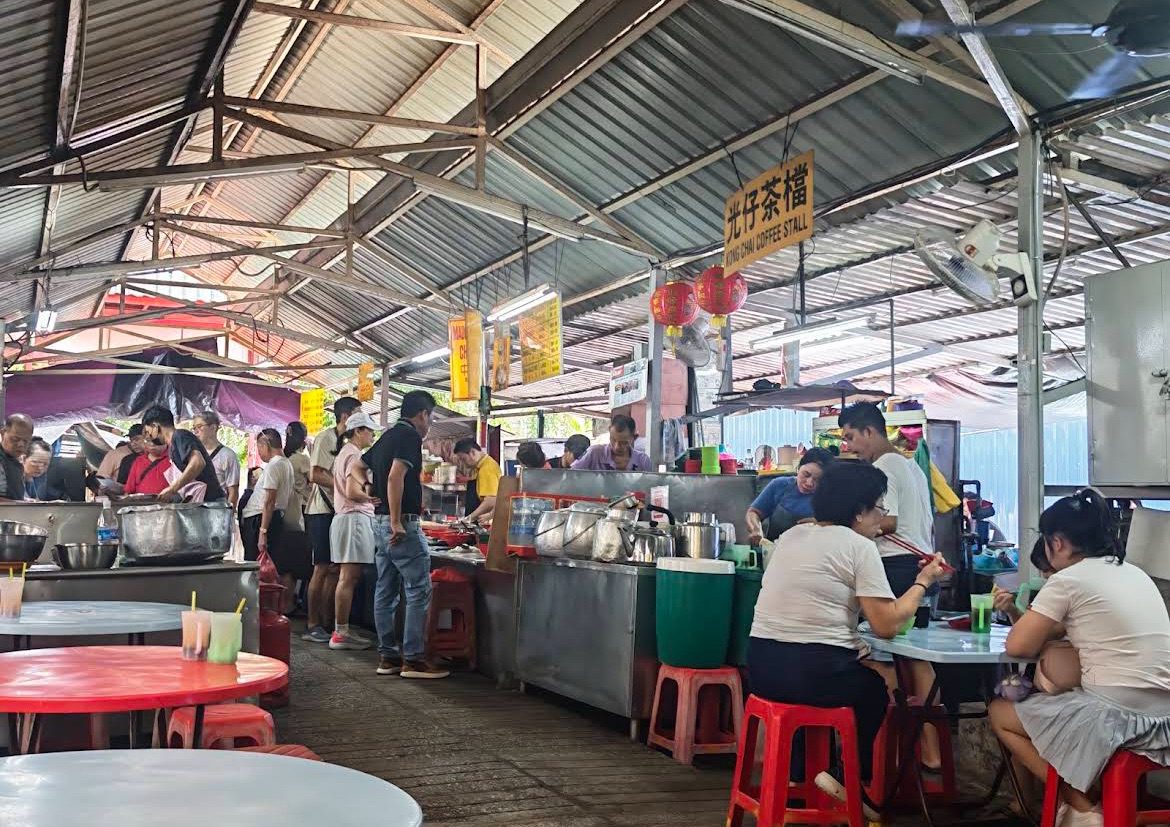
A junction. A crowd. Steam rising. Plastic stools. Breakfast in full swing.
The stalls are run by the older generation – people who have been doing this for decades, maybe longer. No menus, no branding, no performance. Just repetition and muscle memory. Chee cheong fun at one stall. Curry laksa at another. Yong tau foo and curry mee are anchoring the rest. Everything revolves around the same idea: hot broth and deep flavour. Feels like it could cure any illness.
At first, it makes no sense.
It’s not a restaurant. Not quite a stall either. You don’t order, you assemble. Step up, point, nod, hope for the best. Most of what’s on display is unlabelled and, to the untrained eye, unidentifiable. The safest strategy is simple: watch the locals and copy.
Then it’s your turn.
You step forward. Suddenly, it’s high pressure. The line moves fast, and hesitation is not appreciated. Noodles; thin or thick. That’s your only real decision. After that, just gesture vaguely at everything and commit. Within seconds, it’s done. A ladle of curry broth floods the bowl, releasing a dense, spiced aroma that briefly overpowers the surrounding drains.
You take your bowl and sit somewhere between a plastic stool and a drainage system. If it rains, you suspect this entire place might disappear under water. It feels temporary. Almost illegal. The kind of situation where, if the police suddenly appeared around the corner, everything could disappear in the blink of an eye.
And maybe it is.
There’s talk that places like this are being pushed out; too messy, too real, not the kind of “authentic” that tourism boards like to advertise. Once, there were dozens of these stalls. Now, just a handful remain.
The first bite is a mistake. Scalding. Mouth-burning. Instantly regretted. The spice doesn’t help; it hits fast and sits heavy.
The broth itself is thinner than expected, but loaded with flavour. Imagine your favourite curry stretched into a soup, less intensity, more depth. It clings to everything.
You don’t really know what you’re eating. You discover it mid-bite. Aubergine, soft but still holding shape, soaking up the broth until it bursts slightly under pressure. Perfect. Then something else, a pale, ambiguous strip that looks promising but collapses into a chewy, sponge-like nothing. Pork skin, apparently. Not everything is a win.
The meatballs arrive with familiar mystery. Soft to the point of suspicion. Barely flavoured on their own, but excellent carriers for the broth.
And then, unexpectedly, the best thing in the bowl: potato.
It shouldn’t stand out, but it does. In a sea of unknowns, it’s recognisable. Reliable. A small, quiet reminder of home.
By the end, the verdict is clear.
Is it different? Yes. Adventurous? Definitely. Satisfying? Not entirely. Authentic? Completely.
If you want to understand what Chinatown in Kuala Lumpur used to be, before the polish, before the curation, this is where you come.
No 48 G&M, Jalan Medan Setia 2, Bukit Damansara, 50490 Kuala Lumpur, Federal Territory of Kuala Lumpur
Taste – 7.2 Atmosphere – 7.4 Service – 5.2 Value – 7
Sri Lankan food is better than Indian food. Cue the outrage, the keyboard warriors, the aunties clutching their spice tins. But hear me out: it’s fresher, lighter, and far less likely to send you sprinting to the bathroom. Unlike its heavier North Indian cousin, it doesn’t leave you bloated, sluggish, or spiritually defeated. It’s food you can eat and still function afterwards.
Which begs the question: why aren’t there more Sri Lankan restaurants? Why does Indian cuisine monopolise every high street from London to KL? The answer, most likely, is population. 1.5 billion Indians have carried their food far and wide, while Sri Lanka remains an underrated culinary gem waiting for its global moment.
So when I heard about a Michelin Bib Gourmand Sri Lankan spot tucked away in Kuala Lumpur, my curiosity was instantly piqued. Aliyaa sits in one of KL’s odd, mismatched pockets. A so-called party strip lined with a British pub, a couple of clubs, and late-night burger stalls. It feels like the wrong restaurant in the right place: white tablecloths, soft lighting, the sort of setup that prepares you for foie gras.
The menu, however, is charmingly bare and cryptic. Sri Lankan dish names are offered without a single clue as to what they might actually be. A little description would’ve gone a long way. As it stood, it was culinary roulette.
Ordering drinks shouldn’t have been difficult, but somehow it was. Asking for water turned into an unexpected piece of dinner theatre. I felt like a confused tourist negotiating a burger with no pickles, except all I wanted was water. We eventually got there, after some laughs and a few too many apologies.
The food itself required less diplomacy. We ordered a spread of dishes we couldn’t pronounce, and Google became our silent third diner. We thought about asking for recommendations, but given the water saga, we decided not to push our luck.
I’ve always loved the chaos of everything arriving at once, a table full of dishes you grab, swap, steal, and share. So when I noticed the table next to us guarding their plates like a Gavin and Stacey curry-night reenactment, I wanted to tell them: are your stomachs not bored? It keeps your palate awake instead of hammering it with the same bite on loop.
We ordered a selective range: chicken sothie, fish poriyal, tempered okra, pol roti, and Ceylon roti. The chicken sothie was the instant star; deep red, clearly simmered into mellow perfection, rich but not heavy. The chicken was tender, the sauce fragrant and creamy without a hint of clag. Made for a perfect mop up with the selection of rotis.
The pol roti was interesting. Coconutty and dense, it drifted into chewiness, losing a little freshness and edging toward overdone. Still flavourful and unique, but not at its best. The same goes for the Ceylon roti, which was just slightly chewy but had a nice buttery flavour.
The fish poriyal, on the other hand, was the knockout I didn’t see coming. It looked plain, like the sort of fried fish you’d get on a tired weekday in Britain. But one bite in, and it was a revelation: meaty, moist, lightly crisp, with a gentle herb coating and just enough oil to avoid greasiness.
And then the okra, my forever favourite underrated vegetable. No, I can’t explain the slimy goo situation; yes, it’s part of the charm. Aliyaa’s okra was exceptional: cooked with onions, garlic, and subtle spices I couldn’t name but definitely appreciated. Bright, savoury, refreshing—the perfect palate cleanser between richer dishes.
In the end, Aliyaa does something rare in KL: surrounded by curry spots, it gives you a curry experience that doesn’t weigh you down. It proves that spice, richness, and refreshment can coexist, that curry doesn’t have to be a gut-punch. For around 180RM, including drinks, you get thoughtful flavours, a relaxed atmosphere, and dishes that leave you comfortably full rather than comatose.
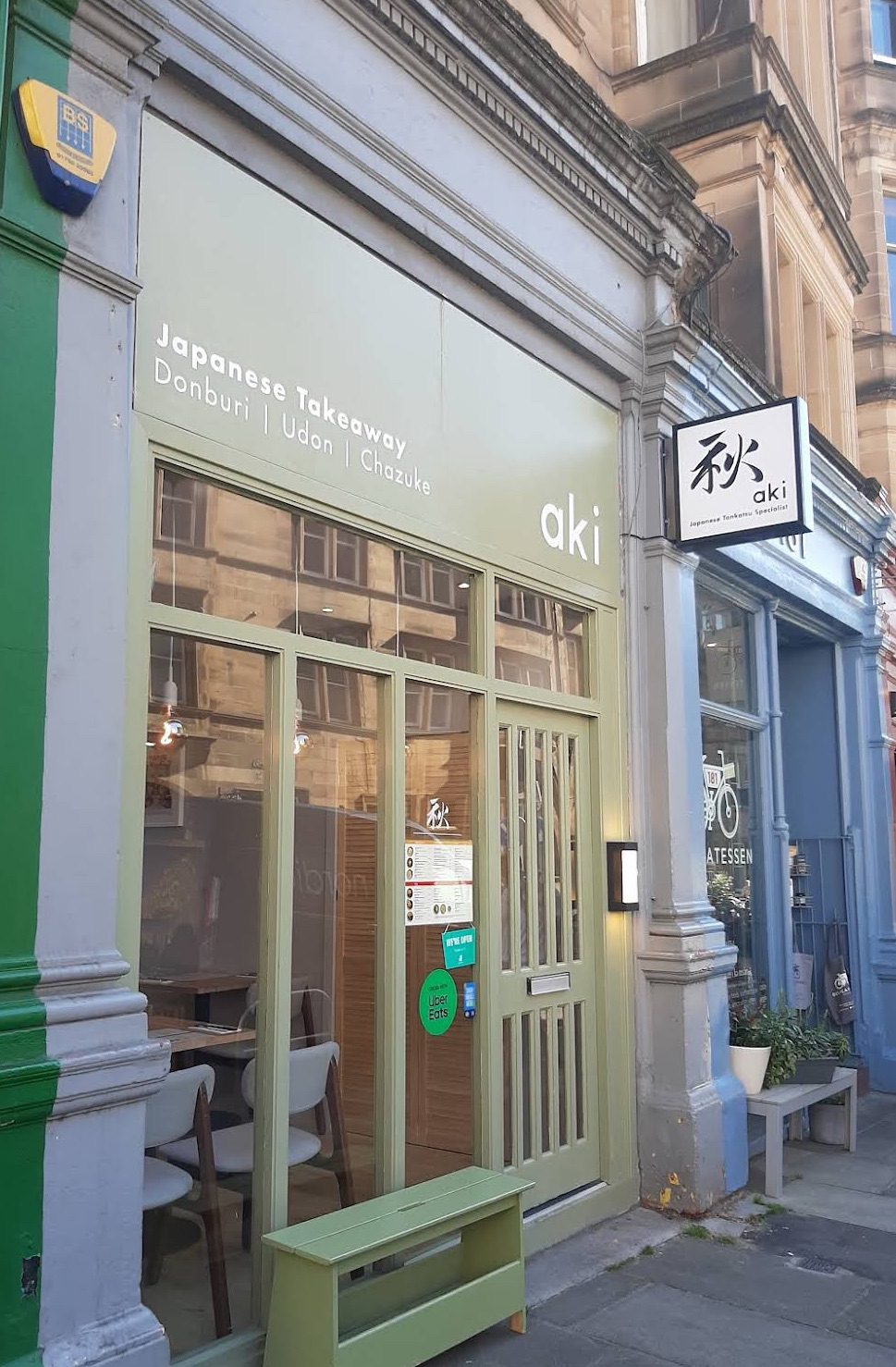
Udon, ramen, katsu—words that echo the soul of Japanese cuisine. In the UK though? I’ll admit, they don’t usually spark much excitement for me. But passing by Aki every morning on my way to uni, curiosity got to me. Tucked between a row of buzzing restaurants, it’s easy to overlook. With its clean, minimalist aesthetic and just a handful of tables, it feels like the kind of place made for quiet catch-ups or a low-key dinner date.
The place was glowing—not just from the sunlight, but from the waitress beaming like she’d just won the lottery. Somewhere between joyful and mildly unhinged, her energy somehow made the whole space feel weirdly comforting. She also dropped a little culinary gem: Sappari—a Japanese word meaning refreshed or relieved. According to her, it perfectly captures the essence of what Aki aims to serve.
Oolong tea? Check. Ordered immediately, because nothing pairs better with Japanese food than that light, floral goodness that refreshes the palate without interrupting the delicate flavours. The menu was stacked—donburi, udon, curries, even a few Western twists thrown in. Perfect for picky eaters looking to dip a toe into the world of Japanese cuisine without full commitment (speaking to you—parents with chicken nugget children).
I went with the Onsen noodle and Katsudon, plus a side of karaage chicken and miso soup. No real rhyme or reason for choosing the Onsen noodles, other than the fact it sounded weird and quirky… and it absolutely delivered. The tenkasu—those crispy batter bits—initially added a satisfying crunch, like Rice Krispies. But the magic faded fast; left to lounge too long, they turned into mushy little sponges. Still, the broth was a winning blend of sweet and salty, rich with soy sauce that hit all the umami notes. And the udon? Perfectly cooked—none of that rubbery Wagamama stuff. It tasted fresh, with just the right amount of bite. Karaage chicken—tender, juicy, and my personal poultry soulmate. The trouble is, most places serve it up the same. Which is great… but also weirdly disappointing when you’re hoping for a twist. Still, paired with a palate-cleansing sip of miso soup, the chicken delivered its full flavour drama. And honestly? I’d happily relive that crispy-soft combo all over again.
Price-wise, it’s a win—just £15 for dinner, drink included, and zero regrets. If you’re craving something beyond the usual sushi spread and want a laid-back vibe, this place nails it
Just another curry house? NO! An authentic middle eastern and Indian curry spot run by the mosque next door!
Taste – 8.1/10
Atmosphere -6.7/10
Service – 7.2/10
Value – 9/10
50 Potterrow, Edinburgh EH8 9BT
Hungover, drained, and peckish. Finding the right craving to cure this decrepit lifestyle can somewhat be challenging. Curry? A slightly bizarre choice for a hangover meal, sure—but it’s got that greasy goodness that somehow works magic on the morning-after blues.
Enter Mosque Kitchen. I’d heard plenty of buzz about this local legend—famous for serving up budget-friendly curries inspired by flavours from both India and the middle-east, catering to everyone from worshippers fresh out of Salat to die-hard foodies like me!
First mission: tracking it down. You’d think, “Easy—just look for a Mosque”. But in Edinburgh, nearly every structure could fit the bill. It’s a city of towering stone silhouettes, where even mosques blend into the skyline. Tucked down a quiet lane, next to a car park, it suddenly revealed itself—gleaming unexpectedly in the sunlight, with a cozy little restaurant nestled right beside it.
Inside felt like stepping into a wine cellar—but not the moody, musky kind. The low, curved ceiling gave it that underground charm, but the bright white walls and gleaming, slightly askew metal tables on either side gave a largely different feel to anything in Edinburgh.
Laid out in classic canteen style, the food was all showcased in towering metal vats. The setup was refreshingly simple: point at what you fancy, pay up, and dive straight in. Dining solo meant I couldn’t sample the whole spread—tragic, really. So I went with the chicken bhuna and rice, plus a side of vegetable samosas, on the friendly recommendation of the young gent behind the counter. Generous portions? Absolutely. Aesthetic appeal? Let’s just say the three samosas were strategically perched on top like culinary confetti, bravely trying to turn a solid 3/10 into a visual masterpiece. Not the prettiest plate I’ve ever seen, but hey—cheap eats aren’t about the glam. The vegetable samosas didn’t quite hit the mark. Maybe it was the late-afternoon lull, but what I got felt like the soggy leftovers—the kind of scrappy bits you’d find at the bottom of a biscuit tin. Sure, the flavour held up, but overall they were underwhelming. A place like this should deliver consistency from open to close, not just shine when the doors first swing open.Brutal honesty? Maybe. But let’s be real—appetisers are just the opening act. The curry? That’s the headliner. A mountain of fragrant rice drenched in rich, red sauce. Each bite was a symphony: heat that gently soothed the sweetness, spices dancing with intensity, and soft, hearty chunks of marinated chicken melting just by the grit of your tongue. Hands down, it was the kind of dish that makes you stop mid-meal and whisper, “This might be the one.”
Mosque kitchen definitely lived up to the expectations—£11 in total including a drink is outright crazy in these current times. The portion could easily feed two people and provide fresh, unique flavours you would never get at your local Indian. This is a spot I will definitely be a regular at, being perfect for solo visitors or large groups.
But now, the real question—the one everyone’s asking: did it cure my hangover? Nope. Not even close. But compared to the greasy despair of a full English that feels like punishment in breakfast form, this was pure redemption on a plate.
Melted Magic in Every Bite – Edinburgh’s Toastie Game Changer!
104 Bruntsfield Pl, Edinburgh EH10 4ES
Taste – 7.8/10
Atmosphere – 6.7/10
Service – 8.8/10
Value – 7.6/10
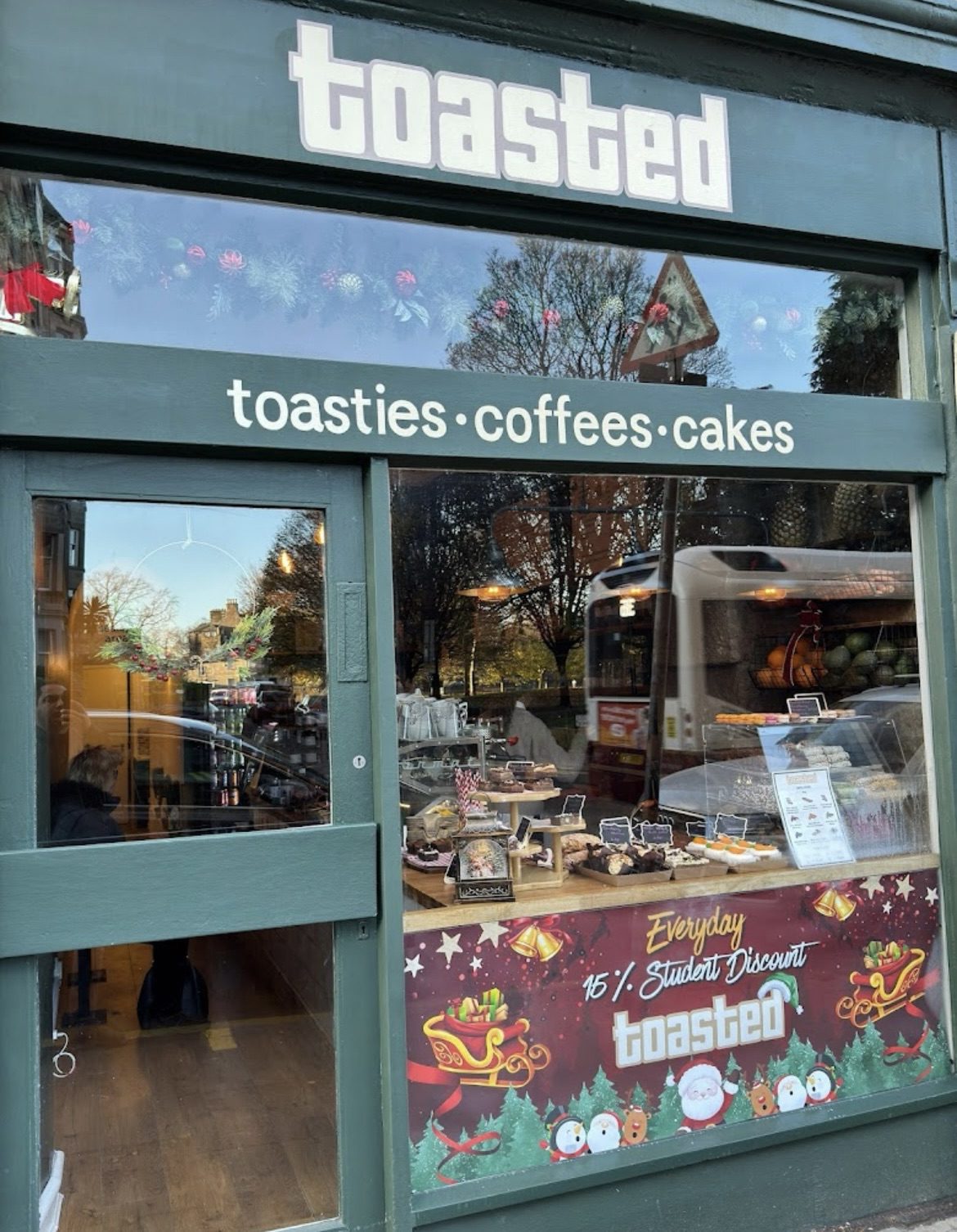
Toasted has been giving me the eye from across the street for months now. Tucked into the lively sprawl of Bruntsfield, elbowing for space among the artisan coffee joints, it has carved out something rare: a genuinely thoughtful coffee and toastie spot. Not just another café with a panini press, but a place with actual intent—something you don’t stumble across often in Edinburgh, no matter how many oat milk flat whites you’ve had. With its bold TOASTED signage slapped across the front like it’s shouting over the noise of Bruntsfield, and a line-up of homemade cakes practically winking at you from the window, there’s no confusion about what’s on offer. It’s toasties. It’s coffee. It’s cake. And it’s not pretending to be anything else. Family-run by a couple and their daughter, it offers a friendly, relaxed environment to enjoy either a takeaway with a pleasant chat or a cosy sit-down in practically their living room, with tight-nit tables and a massive window beaming with sunlight.
From humble ‘classic melts’ to the bold and indulgent ‘signature melts’, there’s a toastie for every taste bud. But let’s be real—if you’re ordering a plain ham and cheese, you might as well stay home and let your toaster handle the mediocrity. The real action is in the signature melts: ‘The New Yorker’ brings pastrami and mustard together like a deli daydream; ‘The Spicy Fajita One’ cranks up the heat with jalapeños, chicken, and salsa; ‘The Bruntsfield Stack’ stacks up ham hock and chicken pesto like it’s building a flavour skyscraper; and ‘The Highlander’ goes full Scottish with haggis and peppercorn sauce—because why not? These toasties show the uniqueness and why Toasted has been one of my favourite lunchtime meals.
Eachtoastiecomes with its own signature dip—think of it as the pizza crust dipping craze, but toastie-style. (Italians would probably disapprove, and honestly, same.) Choose from guacamole, sweet chilli, spicy sauce, classic ketchup, or creamy mayo. If you’re in it for maximum flavour and getting your moneys worth, guacamole’s the real MVP—cool, creamy, and refreshingly perfect with every bite.
The Bruntsfield Stack takes the crown when it comes to indulgent, greasy satisfaction. You simply can’t beat the rich harmony of freshly made pesto, melty cheese, tender chicken, and savoury pork—it’s the kind of flavour combo that wraps you in warmth, like your favourite jumper on a chilly winter day. And while guacamole does a decent job cutting through the richness, it’s the sweet chilli that really brings the zing, turning each bite into a fiery little celebration.
For just £8.50, you’re treated to a generously sized toastie absolutely packed with fresh, flavourful ingredients—and that’s before the student discount kicks in. It’s hard to believe something this satisfying comes at such a bargain. From the first bite to the last, every element feels carefully crafted to comfort and fuel you for the day ahead. The experience is nothing short of delightful, leaving you not only full, but feeling like you’ve been wrapped in a warm hug. No downsides. Just great food, great value, and great vibes.
China Town’s Hidden Gem: A Must-Try Hole-in-the-Wall Delight – London
Taste – 8.0/10 Atmosphere – 6.2/10 Service – 6.8/10 Value – 8.5/10
Once a bustling haven of sizzling woks and dumplings, Chinatown has now gone the way of all good things: straight into the gaping maw of tourism. The charm’s been traded for convenience, the flavours dulled, and the old-timers-the ones who knew their way around a cleaver—have mostly packed up and gone. It’s a letdown for proper food obsessives on the hunt for a gloriously greasy, no-nonsense Chinese feast.
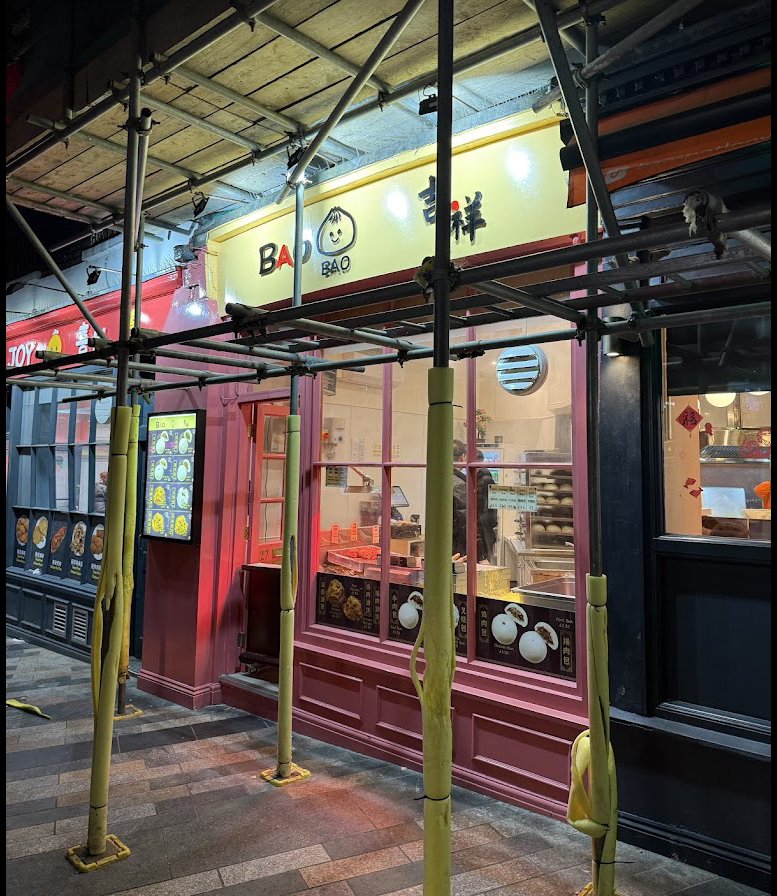
However, enter Bao Bao! Or rather, try to. It’s tucked away like a guilty secret, signage obscured by scaffolding (which, frankly, feels like part of the experience), and offers a menu so minimalist it borders on cryptic. No seats, no frills, and no clue if it’s genius or just another Instagram trap.
Pancakes and buns. That’s the whole show—take it or leave it. But don’t expect a stack of fluffy Americana here. These “pancakes” are craggy, golden boulders that wouldn’t look out of place in a tray of rock cakes. The fillings—oyster, pork, or chicken—are slapped onto a ladle like dumpling mix, then unceremoniously dunked in batter and deep-fried until golden. This performance is all done right in front of you by an elderly Chinese woman with the kind of no-nonsense efficiency that makes you feel like you’ve stumbled into a back alley in Beijing. Burning hot from the combination of grease and juices seeping from the boulder, it makes for a slow-burner to nibble on. The pork, combined with its mystery copartners, was juicy, packed with numerous flavours of herbs and spices. What set it apart were the rough, uneven cuts of ingredients—like a leafy green that tasted vaguely of spinach, generous chunks of cabbage, and mushrooms in all shapes and sizes. These gave the pancake a rustic texture and a bit of unpredictability with each bite. It felt genuinely homemade, like something thrown together with care rather than precision, which added to its charm.
If you’re a seasoned foodie, you probably don’t need me to explain bao buns—they’re hardly a revelation. A staple across much of East and Southeast Asia, they’re the go-to snack: soft, pillowy buns with a hint of sweetness, wrapped around a variety of savoury and sweet fillings. Reliable, comforting, and easy. Bao Bao’s buns were unexpectedly massive—easily the size of my head—and filled with combinations even a seasoned bao enthusiast like myself hadn’t come across before. The pork filling came with a rich, almost gravy-like sauce made from its own juices, coating the mouth in deep, savoury flavour. Paired with the gentle sweetness of the bun, it made for a surprisingly well-balanced and satisfying bite.
It’s definitely an experience worth remembering—and at £7.50, it’s a bit of a bargain. Cash only, which is mildly annoying (but let’s be honest, it’s Chinatown—what did you expect?). If you find yourself wandering through the area, a bit peckish and unsure where to land, this little spot is perfect for a quick bite while you gather your thoughts and plan your next move.
A Vietnamese staple. A traveller’s dream. The best sandwich in the world??? A review of Banh Mi Brothers – Edinburgh
Taste – 8.2/10 Atmosphere – 6.2/10 Service – 8/10 Value – 9.1/10
The humble, yet dependable Vietnamese sandwich, the Banh Mi, has triumphantly crossed borders into the Western culinary scene. These sandwiches, crafted by charming Vietnamese ladies at roadside carts, offer a transformative experience that promises to instantly satiate your hunger. This culinary marvel is being passionately recreated by Western food enthusiasts, bringing a slice of Vietnam to our streets.
Driven by young, affluent adventurers chasing the thrill of their Asian backpacking escapades, Banh Mi shops are sprouting up everywhere. With a bit of parental backing, they’re opening up shops to cater to the Banh Mi craze. Banh Mi Brothers is a perfect example of this trend. They began in their university accommodation kitchen, drawing inspiration from their travels, and have now established themselves in the bustling old town of Edinburgh.
The hip decor, with mellow R&B spinning on vinyl, gives the place a vibrant, friendly vibe. The staff are affable and attentive, making ordering a breeze. The menu is delightfully simple, offering just a few options – perfect, since you’re here for one thing: the Banh Mi! I opted for the chicken gochujang Banh Mi and the char siu pork Banh Mi, both loaded with all the essential toppings. The toppings are crucial in a Banh Mi: pâté, pickled vegetables, chillies, and coriander, all nestled in a crispy petit baguette (because, naturally, the West had to leave its mark in Vietnam). But the true test of a great Banh Mi is the meat. The chicken was cooked to a tender perfection, glazed flawlessly with gochujang sauce, delivering a tangy, rich flavour that melded beautifully with the creamy pâté. The pork, slow-cooked to juicy tenderness, boasted a char siu flavour – one of my all-time favourites – that turned each bite into a mouth-watering celebration. At £6.50, it’s a steal. Maybe not as cheap as in Vietnam, but definitely a bargain by Western standards. They also offer a meal deal: a Banh Mi, a side salad, and a drink for £8.50. Naturally, I went for this, and the mixed bean and vegetable salad was a refreshing twist on simplicity, with a soy dressing adding a salty-sweet kick. The homemade iced tea was a hit too, providing a perfect palate cleanser for the spice.
Overall, the food was exceptional, offering a unique modern twist with flavours not typically found in a Banh Mi, like gochujang. The only downside is the seating – there aren’t many places to sit, which can make the atmosphere feel a bit soulless, especially when the lunchtime rush of office workers hits. But, given it’s a sandwich bar, I’ll let that slide.
Despite this, the place is an absolute must-visit! In my humble opinion, the Banh Mi is the best sandwich in the world, and undoubtedly, this spot has the best sandwich in Edinburgh.