Taste – 8
Atmosphere – 5.6
Service – 9.6
Value – 9.3 (11,000riel/£2)
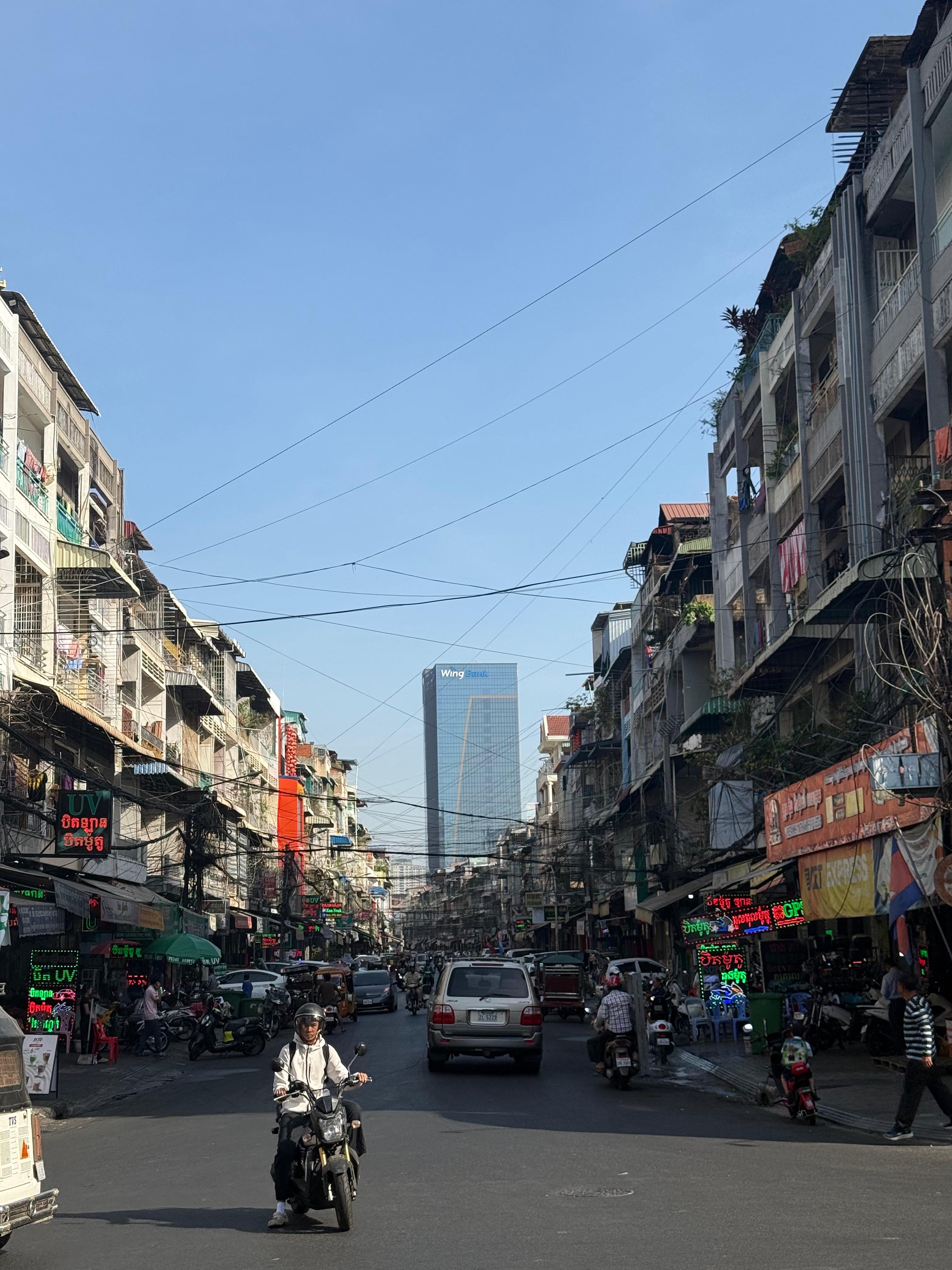
Phnom Penh is a city that has lived several different lives. War zone, ghost town, Chinese investment project, and now, reluctantly, a tourist destination. The strange part is that the city still hasn’t fully realised tourists are here. You walk past packed restaurants full of locals, look them up online later, and discover they barely exist on the internet. No reviews. No curated interiors. No carefully engineered “local experience.”
Good.
Somehow, we’ve decided food should now be filtered through strangers. But what does their opinion actually tell you? You don’t know how they live, what they eat, whether they think mayonnaise is spicy, or if they leave one-star reviews because the waiter didn’t smile enough.
Phnom Penh felt refreshing for exactly that reason. Like stepping backwards into the kind of world my parents talk about with nostalgia.
So naturally, curiosity took over.
It was lunchtime. We’d just abandoned a perfectly good Western café after deciding we couldn’t face another overpriced eggs-on-sourdough situation. Instead, we wandered through the city: past gleaming luxury car dealerships, men pissing casually into drains, and heat so aggressive it seemed to sandpaper the skin while sealing a layer of sweat and dirt onto your forehead.
Then came salvation.
A small roadside setup tucked beneath a shaded awning. No sign. No menu. Plastic stools. Metal tables cluttered with condiments, mismatched chopsticks, chilli sauces, and those tiny coloured cups that seem designed exclusively for children to throw across rooms.

The smiles arrived before we even sat down. The sort usually reserved for relatives returning from overseas. We had clearly interrupted a very local lunch service. A small child was gently displaced from his solo iPad-and-noodle session to make room for us, which immediately made us feel guilty, so we invited him back to sit beside us and continue eating.
The owner appeared soon after. Sixty years old, apparently. Though he looked closer to forty in the way older Southeast Asian men sometimes do, lean, wiry, permanently youthful through a lifetime of movement.
There was only one thing to eat.
Beef noodles in broth.
That’s it. No specials board. No attempt to upsell. Just beef noodles.
While we waited, the owner sat down and started talking. Not small talk either. Full history. Life during the Khmer Rouge. Forced displacement. Family members killed. Phnom Penh before and after the regime. Chinese money pouring into Cambodia. Corruption. Tourism. Politics. At one point, he even disappeared briefly and returned holding documents relating to the Khmer Rouge tribunal, unfolding them carefully across the table like evidence in a court case.
He spoke with the confidence of someone who had spent decades telling these stories and surviving them.
Then, as soon as the food arrived, he stepped away without lingering. Perfect hospitality: knowing exactly when to talk and exactly when not to.
At first glance, the bowl looked disappointingly familiar. Vermicelli noodles. Beef. Broth. Asia has handed me this exact visual arrangement at least two hundred times already, so expectations were modest. I threw in some chilli sauce and a few unidentified condiments, hoping for the best.

Then came the first sip.
It shouldn’t have worked as well as it did. Normally, hot soup in tropical heat feels less like a meal and more like self-harm. But this somehow refreshed you rather than exhausted you. The broth had real depth to it, not the weak kind that tastes like someone briefly introduced water to a cow bone and then gave up. This was proper stock. Slow-cooked. Dense with flavour. Earlier, I’d noticed a young woman tending an enormous simmering pot beside the cart, loaded with bones and vegetables, bubbling away like geological activity.
The noodles themselves were forgettable. Fine. Functional. Just there to transport broth into your mouth.
The beef, though, was absurdly good.
Soft enough to collapse under the slightest pressure, but still rich with flavour. The kind of texture expensive restaurants spend hours trying to perfect before charging you £28 for three slices of it beneath micro herbs and existential lighting.
Then there was the sauce. Some deeply savoury mixture of soy, fish sauce, and other things I couldn’t identify. I was instructed to pour it straight into the bowl, which completely transformed the whole thing. Suddenly, it stopped tasting like “beef noodle soup” and became its own dish entirely, deeper, almost parental in its comfort.

All of it came with endless glasses of cold green tea, free of charge, which, in that heat, felt less like hospitality and more like life support.
Before leaving, curiosity got the better of me. I wanted to know how this place had survived, why beef noodle soup became the thing, and why it felt so untouched by the modern restaurant machine. The owner explained that after the Khmer Rouge left Phnom Penh, the family moved into the building for free, a sentence that sounds completely absurd until you remember that Cambodia’s recent history is filled with things far stranger than that. Since then, it has remained a family operation. Husband, wife, and two daughters. Hence the name: Three Ladies.
And somehow that made perfect sense.
The restaurant felt tied to Phnom Penh in a way polished cafés and rooftop cocktail bars never could. Not curated culture, but lived culture. The sort that survives quietly without needing branding consultants or neon signs telling you it’s “authentic.”
Part of me hopes it never changes. It stays slightly hidden, slightly offline, existing mostly through word of mouth. Though, admittedly, before leaving, I did set them up with a Google account, just in case they ever decide they want the internet to find them after all.