Tag: Noodles

  • The one-dish restaurant and its discontents

    The one-dish restaurant and its discontents

    Clean signage, no English, a wooden bench perched outside like some takeaway joint. Menya Hanabi. A simple place. Clearly focused on efficiency and the food rather than anything extravagant. Step inside, and you hit a mass of solo diners. Heads down, slurping thick steaming noodles, thoughts pummelling through them. It felt like walking into an office where everyone hated each other and would rather eat alone. All suited up, hair over their eyes, no sudden movements, flinching at anything that brushed them.

    The interior was interesting. Interesting in the way that makes you ask whether construction had actually finished. Plywood still exposed around the kitchen counters, wires and random chargers flailing loose, waiting to electrocute someone. Lamps hanging ajar overhead, primed for a head smack. But we are in Asia, and the staff flew around the place like the world had just ended. Sitting down, I felt thoroughly reassured this spot was the real thing.

    The menu, well, nothing surprising. Couldn’t understand half of it, even though it was in English. The words were in Japanese. So I stepped back into my early days, staring at the pictures with my mouth open like I knew exactly what was in each dish. Went for the easy option. The one with a star next to it, taking up a whole page. The dish people come from far and wide for. The Nagoya Mazesoba.

    Nagoya, not Taiwan, despite what the name leads you to believe. The thing was invented in Nagoya around 2008, a Japanese spin on a Taiwanese minced pork noodle, and from there it went chain shop, then global. Another dish quietly lifted, sharpened, and sold back to the world. The Japanese are good at that.

    Small at 24RM, large at 26RM. Two ringgit between them, which felt like a con. Everyone’s sitting there with the big bowl. A cheeky little upsell. Had to add the gyozas, as always. You can tell a place by them.

    The restaurant was filled with steam and chatter. Mostly the staff screaming across the room and the clash of pans in the kitchen. The food soon arrived. The mazesoba landing before the dumplings is always a bit odd, but food in front of you is a good sign regardless. The dish came neatly presented, each part walled off from the next. It reminded me of being a child, picking meals apart and taste testing before saving the best for last. That didn’t last long. Aesthetically I lifted the thick soba up to the roof before splatting it down, mixing the condiments into a thick sludge. The gloop of the noodles, coated generously in rich tangy sauce and minced beef, meant every bite was perfectly covered. The slurp, the gulp, the stained cheeks, the crunch of spring onions. A sensory masterclass. Every taste bud covered. The kind of meal where you could be drunk. Taste dialled up, eyes staring into nothing, no words, just slurping it down.

    Then the goldmine. Still hungry? No need to fear. You get topped up with rice. Warm sticky rice, dropped into the bowl still slick with that thick, salty sauce. Mix it all together and you’ve got an incredible palate cleanser. Bowl left clean. Like a dog licking the leftovers off a plate.

    The dumplings turned up annoyingly late and didn’t taste anywhere near the soba and rice. A let down, and it left a slightly flatter taste in my mouth on the way out. So, for future readers and restaurant goers, this spot is for the mazesoba and nothing else. Quick stop, clean the bowl, out you leave. Thirty minutes max. Satisfied and content with what you’ve just eaten.
  • The Three Ladies of Phnom Penh: Soup in the Offline Age

    The Three Ladies of Phnom Penh: Soup in the Offline Age

    Taste – 8
    Atmosphere – 5.6
    Service – 9.6
    Value – 9.3 (11,000riel/£2)

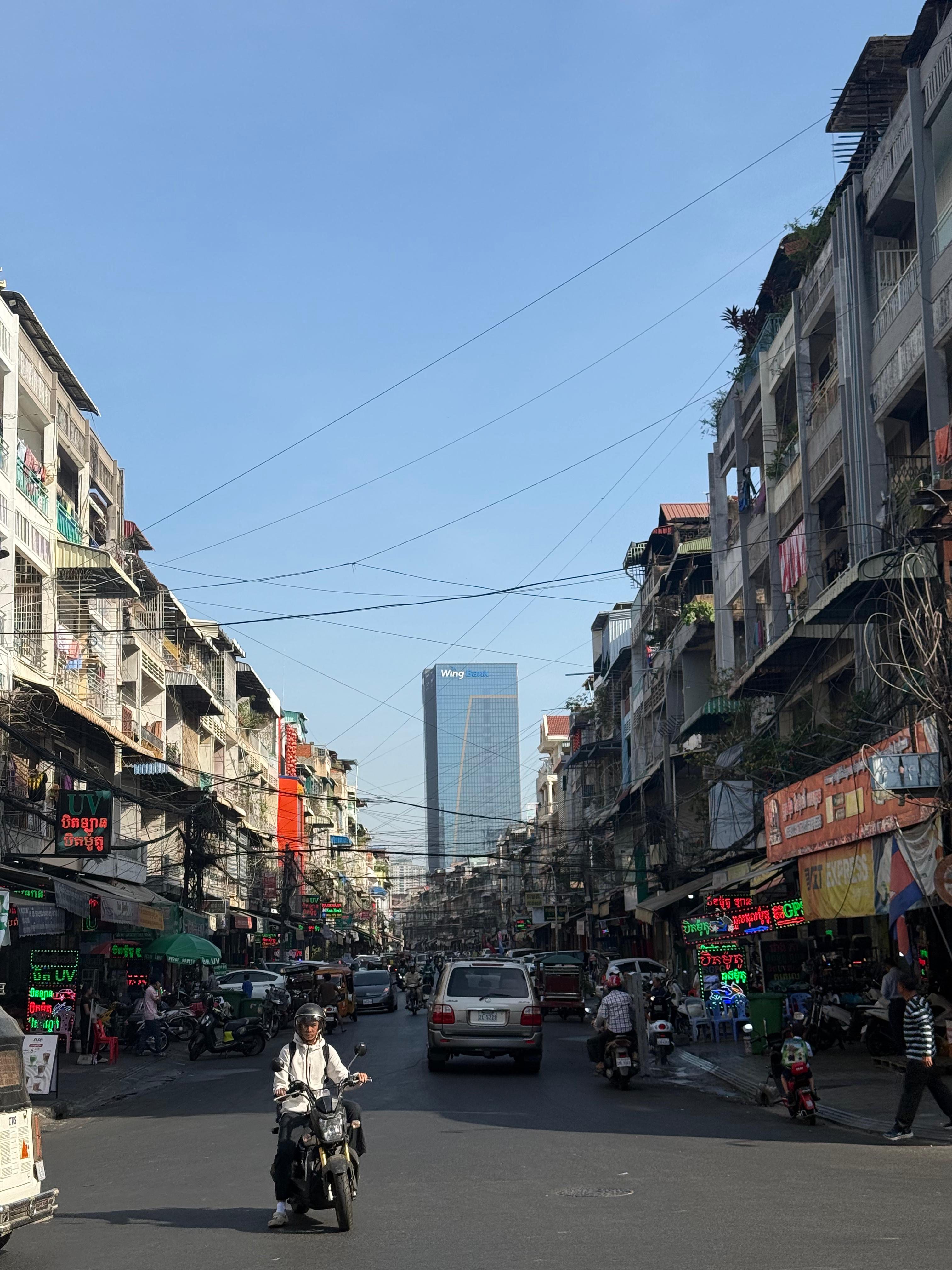
    Phnom Penh is a city that has lived several different lives. War zone, ghost town, Chinese investment project, and now, reluctantly, a tourist destination. The strange part is that the city still hasn’t fully realised tourists are here. You walk past packed restaurants full of locals, look them up online later, and discover they barely exist on the internet. No reviews. No curated interiors. No carefully engineered “local experience.”

    Good.

    Somehow, we’ve decided food should now be filtered through strangers. But what does their opinion actually tell you? You don’t know how they live, what they eat, whether they think mayonnaise is spicy, or if they leave one-star reviews because the waiter didn’t smile enough.

    Phnom Penh felt refreshing for exactly that reason. Like stepping backwards into the kind of world my parents talk about with nostalgia.

    So naturally, curiosity took over.

    It was lunchtime. We’d just abandoned a perfectly good Western café after deciding we couldn’t face another overpriced eggs-on-sourdough situation. Instead, we wandered through the city: past gleaming luxury car dealerships, men pissing casually into drains, and heat so aggressive it seemed to sandpaper the skin while sealing a layer of sweat and dirt onto your forehead.

    Then came salvation.

    A small roadside setup tucked beneath a shaded awning. No sign. No menu. Plastic stools. Metal tables cluttered with condiments, mismatched chopsticks, chilli sauces, and those tiny coloured cups that seem designed exclusively for children to throw across rooms.

    The smiles arrived before we even sat down. The sort usually reserved for relatives returning from overseas. We had clearly interrupted a very local lunch service. A small child was gently displaced from his solo iPad-and-noodle session to make room for us, which immediately made us feel guilty, so we invited him back to sit beside us and continue eating.

    The owner appeared soon after. Sixty years old, apparently. Though he looked closer to forty in the way older Southeast Asian men sometimes do, lean, wiry, permanently youthful through a lifetime of movement.

    There was only one thing to eat.

    Beef noodles in broth.

    That’s it. No specials board. No attempt to upsell. Just beef noodles.

    While we waited, the owner sat down and started talking. Not small talk either. Full history. Life during the Khmer Rouge. Forced displacement. Family members killed. Phnom Penh before and after the regime. Chinese money pouring into Cambodia. Corruption. Tourism. Politics. At one point, he even disappeared briefly and returned holding documents relating to the Khmer Rouge tribunal, unfolding them carefully across the table like evidence in a court case.

    He spoke with the confidence of someone who had spent decades telling these stories and surviving them.

    Then, as soon as the food arrived, he stepped away without lingering. Perfect hospitality: knowing exactly when to talk and exactly when not to.

    At first glance, the bowl looked disappointingly familiar. Vermicelli noodles. Beef. Broth. Asia has handed me this exact visual arrangement at least two hundred times already, so expectations were modest. I threw in some chilli sauce and a few unidentified condiments, hoping for the best.

    Then came the first sip.

    It shouldn’t have worked as well as it did. Normally, hot soup in tropical heat feels less like a meal and more like self-harm. But this somehow refreshed you rather than exhausted you. The broth had real depth to it, not the weak kind that tastes like someone briefly introduced water to a cow bone and then gave up. This was proper stock. Slow-cooked. Dense with flavour. Earlier, I’d noticed a young woman tending an enormous simmering pot beside the cart, loaded with bones and vegetables, bubbling away like geological activity.

    The noodles themselves were forgettable. Fine. Functional. Just there to transport broth into your mouth.

    The beef, though, was absurdly good.

    Soft enough to collapse under the slightest pressure, but still rich with flavour. The kind of texture expensive restaurants spend hours trying to perfect before charging you £28 for three slices of it beneath micro herbs and existential lighting.

    Then there was the sauce. Some deeply savoury mixture of soy, fish sauce, and other things I couldn’t identify. I was instructed to pour it straight into the bowl, which completely transformed the whole thing. Suddenly, it stopped tasting like “beef noodle soup” and became its own dish entirely, deeper, almost parental in its comfort.

    All of it came with endless glasses of cold green tea, free of charge, which, in that heat, felt less like hospitality and more like life support.

    Before leaving, curiosity got the better of me. I wanted to know how this place had survived, why beef noodle soup became the thing, and why it felt so untouched by the modern restaurant machine. The owner explained that after the Khmer Rouge left Phnom Penh, the family moved into the building for free, a sentence that sounds completely absurd until you remember that Cambodia’s recent history is filled with things far stranger than that. Since then, it has remained a family operation. Husband, wife, and two daughters. Hence the name: Three Ladies.

    And somehow that made perfect sense.

    The restaurant felt tied to Phnom Penh in a way polished cafés and rooftop cocktail bars never could. Not curated culture, but lived culture. The sort that survives quietly without needing branding consultants or neon signs telling you it’s “authentic.”

    Part of me hopes it never changes. It stays slightly hidden, slightly offline, existing mostly through word of mouth. Though, admittedly, before leaving, I did set them up with a Google account, just in case they ever decide they want the internet to find them after all.

  • Discover Payak Noodle Boat – Bangkok’s Legendary Boat Noodle Stop

    Discover Payak Noodle Boat – Bangkok’s Legendary Boat Noodle Stop

    Taste – 7.2

    Atmosphere – 7.9

    Service – 4.0

    Value – 9.6 (around £3 (120 baht) a head)

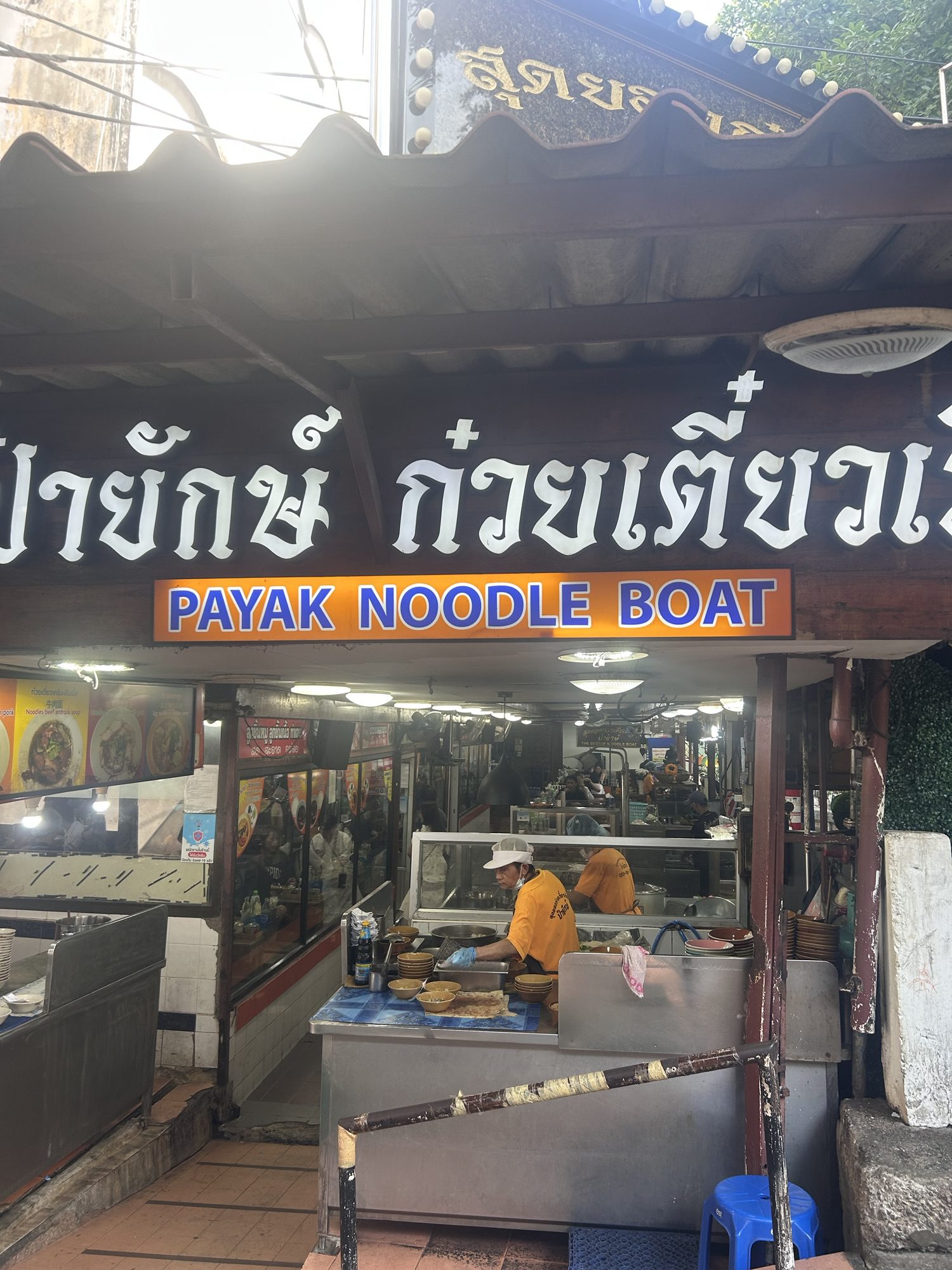
    2 ร้านก๋วยเตี๋ยวเรือป๋ายักษ์ 23-24 Ratchawithi 10 Alley, Thanon Phaya Thai, Ratchathewi, Bangkok 10400, Thailand


    Just off a picturesque roundabout choked with traffic, a canal cuts through the chaos. Follow the narrow alley along its edge, and you’ll find a huddle of boat-noodle shops clinging to the water like they’ve always been there. The canal itself is a curious beauty. Sunlit ripples, bright flowers trailing into the water, and a scent that swings wildly between charmingly earthy and mildly alarming. Then the monitor lizards glide past, parting rubbish like prehistoric gondoliers. It’s filthy, it’s lovely, it’s absurd, and it’s perfect.

    The shopfront is a warm, wooden hug of a place, nothing flashy, just a lone sign stating the obvious with the confidence of somewhere that knows it doesn’t need to shout. Step through the entrance and you’re greeted by a row of tiny culinary outposts: one person coaxing noodles into life, another slicing meat, another fussing over vegetables, and someone else guarding bubbling cauldrons of broth. The air hits you first, steam, spice, and that savoury perfume that makes you lick your lips before you’ve even found a seat.
    The seating layout feels like a little maze, tables crammed with people slurping, and tiny booths tucked along the river like secret noodle nooks. The place hums with locals, families, friends, and anyone else seeking comfort in a bowl. It’s loud, warm, and wonderfully messy, the kind of communal buzz where everyone’s doing the same thing: talking, laughing, and inhaling noodles like it’s a competitive sport.

    The menu couldn’t be simpler: four tiny bowls, each a one-bite wonder. My advice? Order the whole lineup, figure out your favourite two, then immediately order them again like you’ve learned something profound about yourself. The choices are straightforward: beef in thickened broth, pork in thickened broth, pork in a sour broth, and yentafo.

    The bowls arrive whenever the kitchen feels like sending them, stacking into small architectural achievements. I started with the beef-in-thick-broth, and it was the clear champion, maybe because it came first, but mostly because it tasted like it had been simmering since I was born. Dark, rich, meaty with bits of seasoning and meat floating. The beef itself was slow-cooked to that tender, fatty wobble that makes spring onions and firm noodles feel like the perfect supporting cast. An excellent opening act for your noodle tower.

    You’d think pork in broth would be the same old story, just swap out the meat and call it a day. Not here. The broth was thinner, almost delicate, with the clean lift of a chicken stock. It carried the pork like silk, and the meat itself was so tender it practically dissolved on the tongue.

    The next two bowls were where things got interesting. The sour broth was bracingly salty, with a whisper of citrus that cut through in a way that felt oddly restorative, like sipping some herbal tonic before bed, equal parts sharp and soothing.The final dish, though, lost me. Imagine sweet chilli sauce but watered down, its kick reduced to a faint nudge. Into that came fish with all the charm of damp carpet, and an octopus tentacle, buttery at first touch, rubbery in the chew. Still, it’s on the menu, which means someone out there finds joy in it. Just not me.

    There’s something deeply joyful about a table covered in tiny, one-slurp bowls of noodles. The more the merrier, and the weirder the better. Give me the funky, the rubbery, the bowls that look like they were ladled straight from a questionable drainpipe. That’s where the good stuff usually hides. For just 18 baht a bowl, it is an unreal deal! Would highly recommend these boat noodle spots just for the experience alone.

  • Who Is Mr Mee? A Chinese Muslim Restaurant Breaking the Rules!

    Who Is Mr Mee? A Chinese Muslim Restaurant Breaking the Rules!

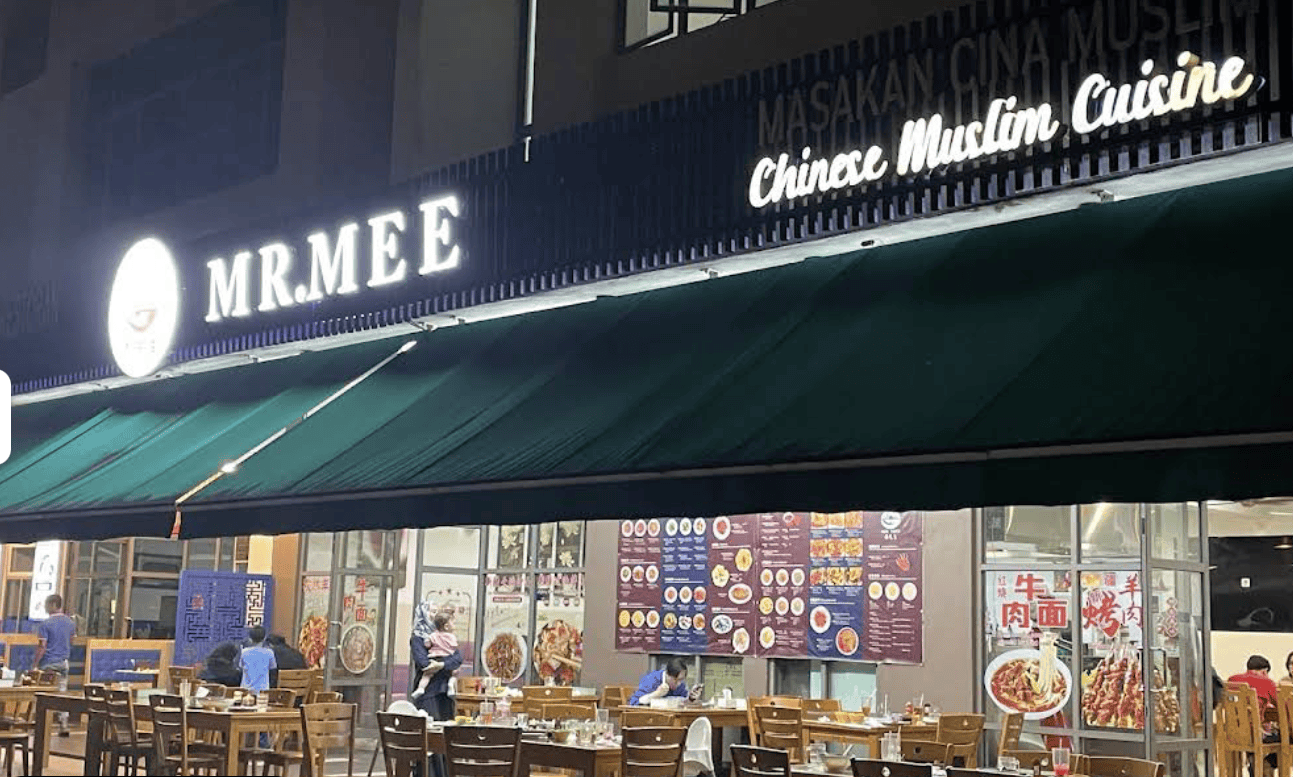
    4810-0-39&40, CBD perdana, 2, Persiaran Flora, Cyberjaya, 63000 Cyberjaya, Selangor

    Taste – 8.2
    Atmosphere – 4.5
    Service – 5.1
    Value – 8.3 (Around £4-6 (20 Ringgit))

    Being from the UK, I’ve watched my expectations of Chinese food steadily erode over the years. London’s Chinatown, once a haven of smoky, late-night brilliance, now feels like a showroom for TikTok’s latest edible stunts. It’s the old adage: America has Chinese food, Britain has Indian, and I agree. In the UK, finding proper Chinese food beyond the usual chow mein and dim sum isn’t easy. That’s not to say there aren’t a few brilliant spots serving real delicacies – they’re just few and far between. So, arriving at Mr Mee in Kuala Lumpur, my mindset was simple: I’d take anything that wouldn’t make me ill and didn’t taste like a sad echo of London’s Chinatown.
    Before entering, I circled the place a few times to build up some confidence. To anyone watching, though, I probably looked like I was casing the joint, especially with a bank right next door. Ignoring the curious glances around me, I walked in like I owned the place – straight to the centre table, leg stretched out, like it was my regular spot and I was Mr Mee himself.
    Dim, soulless, and oddly clinical. The decor was unsettling – tables were scattered in a strange formation, and the lighting was so harsh that it felt like I was preparing for surgery. Most people chose to sit outside, and in hindsight, I probably should’ve joined them. But I’d already made my entrance, planted myself dead centre, and couldn’t exactly slink back out to safety. If I was going to understand this place – its food, its mood – I had to stay put and face it head-on.

    The menu was impressively diverse, featuring not only Chinese cuisine but also dishes unfamiliar to me—some even reminiscent of Middle Eastern fare, like succulent lamb skewers. This called for some serious soul-searching, channelling my inner Mr Mee, pondering life’s great mysteries. First dilemma: what’s the most obscure yet delicious thing on this menu? Easy. Lamb skewers that whispered Middle Eastern secrets, and a noodle dish that looked stunning in the photos (but let’s be honest, pictures are professional liars). I threw in a watermelon juice for good measure, hoping it might perform a miracle on my jet lag. A bold move for a first meal, considering the ice came from parts unknown.

    The “noodles” arrived looking suspiciously like spaghetti. A glorious heap of it, tangled with tender chicken bits, fiery chillies, cracked pepper, juicy tomatoes, and drenched in a rich, dark sauce. One slurp in, and the bounce told me these strands were made fresh, in-house. The spice had a crisp kick that danced beautifully with my cold watermelon juice (a perfect pairing). The tomato-based sauce added an Asian twist with a cheeky nod to Italy.

    Then came the surprise: two lamb skewers, still sizzling on their sticks, crisp from a coal-fired char. Generously brushed with a spicy, rich marinade, the lamb practically slid off the skewer; tender, sweet, fiery, bursting with flavour. I’m usually lukewarm on lamb; it’s hard to find cuts that are juicy, tender, and actually taste like something. But Mr Mee? He delivered one of the most memorable lamb dishes I’ve ever encountered.

    Mr Mee proved a vital culinary truth: the most unassuming, borderline dingy spots often hide the boldest, most unforgettable flavours. No need for fancy plating or Instagrammable interiors, when the food hits, nothing else matters. And the price? A jaw-dropping £6, even after picking some of the priciest items on the menu. If you find yourself in Kuala Lumpur (especially around Cyberjaya), do yourself a favour and make the pilgrimage.